——Technical Insights from a Professional Magnet Manufacturer
Preface
As a magnet manufacturer, we receive various questions every day: “We need to purchase magnets for our new product, how should we choose?” “Which magnet is best for our application?” “Why did the sample test work perfectly, but we’re seeing performance fluctuations in mass production?”
These questions reveal the confusion many product developers face when selecting magnets. Though small, magnets are often critical to product performance—insufficient holding force leads to poor user experience, inadequate temperature resistance causes premature failure, and dimensional deviations affect assembly efficiency. Any of these issues can undermine an excellent product design.
Drawing on years of experience providing magnetic solutions to customers across industries, we’ve compiled this guide to help you systematically understand magnet selection, while demonstrating how our professional services can add value to your products.

Part One: Magnet Selection – Starting with Understanding Your Needs
1.1 Five Questions to Clarify Your Requirements
1: What role will the magnet play in your product?
- Strong holding? Motion drive? Signal triggering? Other innovative applications?
2: What environment will the product operate in?
- Indoor/outdoor? Temperature range? Humidity? Presence of corrosive substances?
3: What are the space and assembly constraints?
- Installation dimensions? Assembly method (press-fit, adhesive bonding, over-molding)?
4: How can performance requirements be quantified?
- What holding force is needed? (in Newtons or kilograms)
- Working distance? Service life?
- Requirements for surface magnetic field, magnetic flux, etc.?
Question 5: What are the cost and certification considerations?
- Target cost? Industry certifications required? (RoHS, REACH, FDA, etc.)
Part Two: Comparison of Four Main Magnet Materials

2.1 Neodymium (NdFeB)
Characteristics: Strongest magnetic performance, with maximum energy product up to 50MGOe⁺, ideal for compact designs; requires surface protection against rust; operating temperature ranges from 80°C to 200°C depending on grade.
Typical Applications: Consumer electronics, smart wearables, medical devices, micro motors
2.2 Alnico (AlNiCo)
Characteristics: Lowest temperature coefficient, magnetic field remains stable across temperature variations; can be machined into complex shapes; low coercivity requires closed magnetic circuit design.
Typical Applications: Instruments, sensors, traveling wave tubes
2.3 Samarium Cobalt (SmCo)
Characteristics: Excellent temperature stability (-273°C to 350°C), superior corrosion resistance requires no surface treatment, stable magnetic properties, higher cost.
Typical Applications: Aerospace, oil drilling, military equipment, high-end sensors
2.4 Ferrite
Characteristics: Low cost, abundant resources; good corrosion resistance; weaker magnetic properties, larger volume required.
Typical Applications: Speakers, toys, micro motors, magnetic door seals
Part Three: Understanding Key Performance Parameters
3.1 Three Core Parameters
Remanence (Br): Represents the magnetic field strength the magnet can produce. For magnets operating in open space (such as attaching to iron plates), remanence is a key indicator.
Coercivity (Hcb): Represents the magnet’s ability to resist demagnetization. For applications operating in reverse magnetic field environments (such as motors), coercivity is particularly important.
Maximum Energy Product ((BH)max): Represents the magnetic energy stored per unit volume. For space-constrained applications, this indicator determines magnet efficiency.
3.2 Temperature Characteristics
Magnetic performance changes at high temperatures in two ways:
- Reversible Loss:Magnetic force decreases as temperature rises, but recovers when temperature returns to normal
- Irreversible Loss:High temperature causes structural changes, and magnetic force cannot recover
Select the appropriate material grade based on actual operating temperature.
Part Four: Shapes and Surface Treatment
4.1 Common Shapes
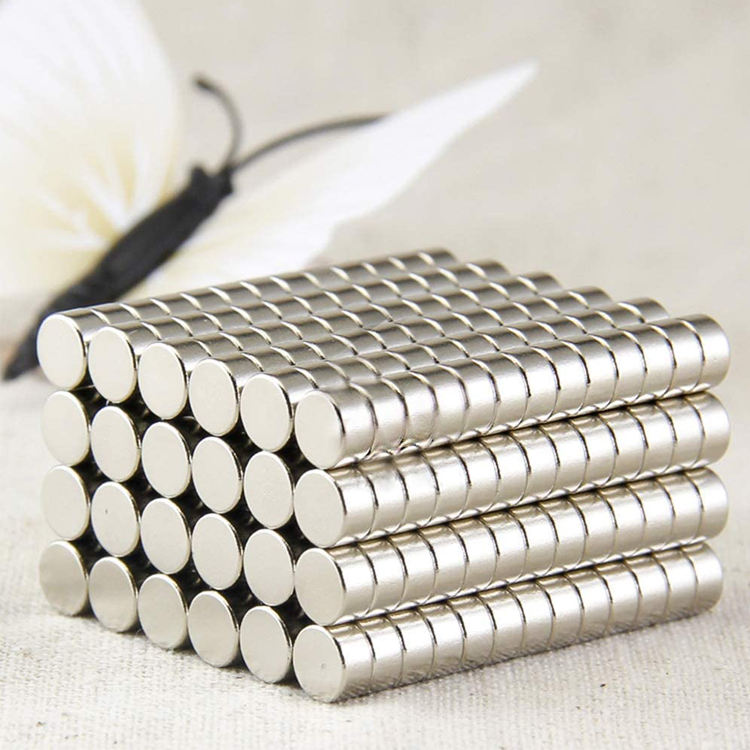
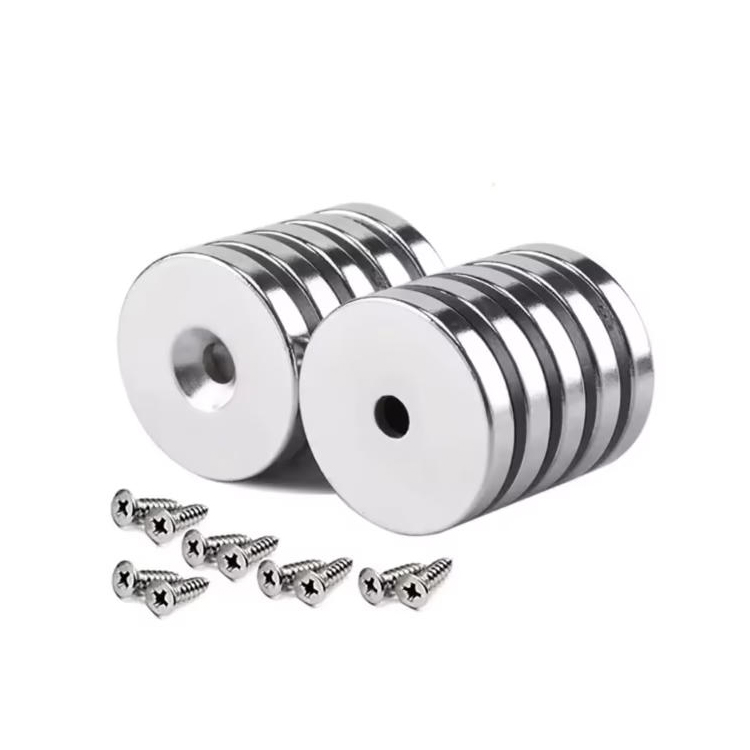
- Discs/Rings:Universal type, suitable for most scenarios
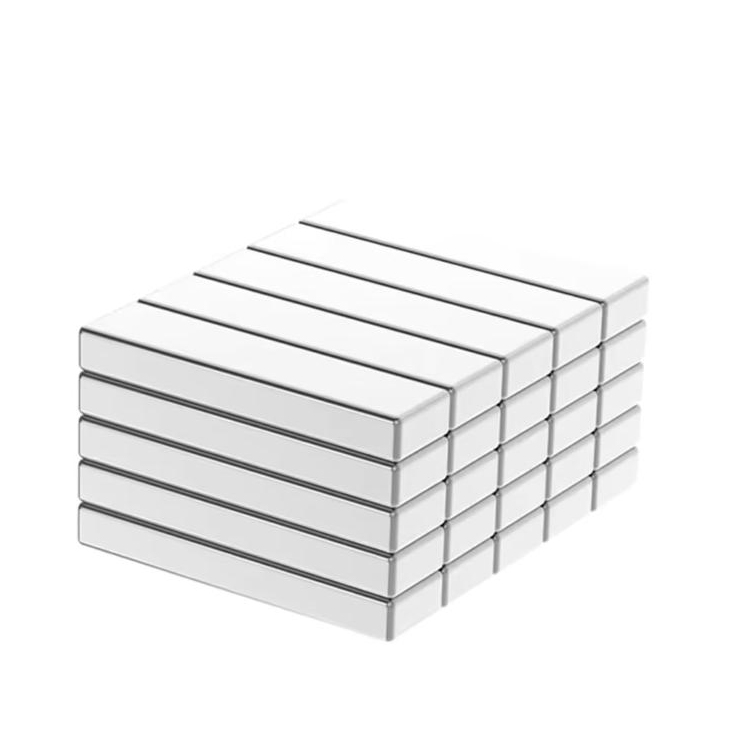
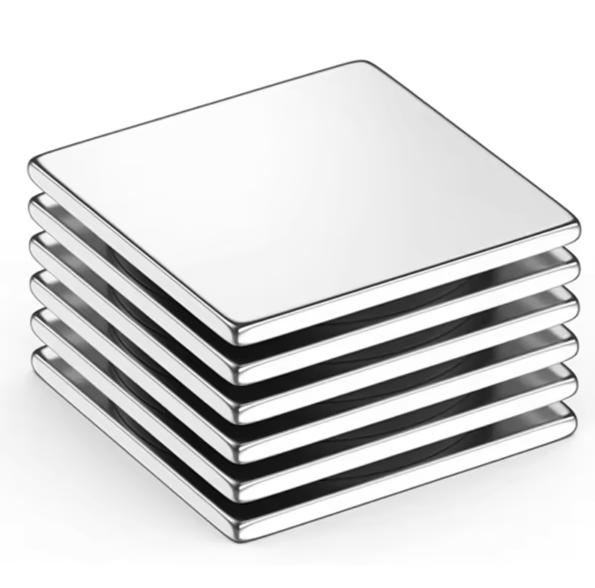
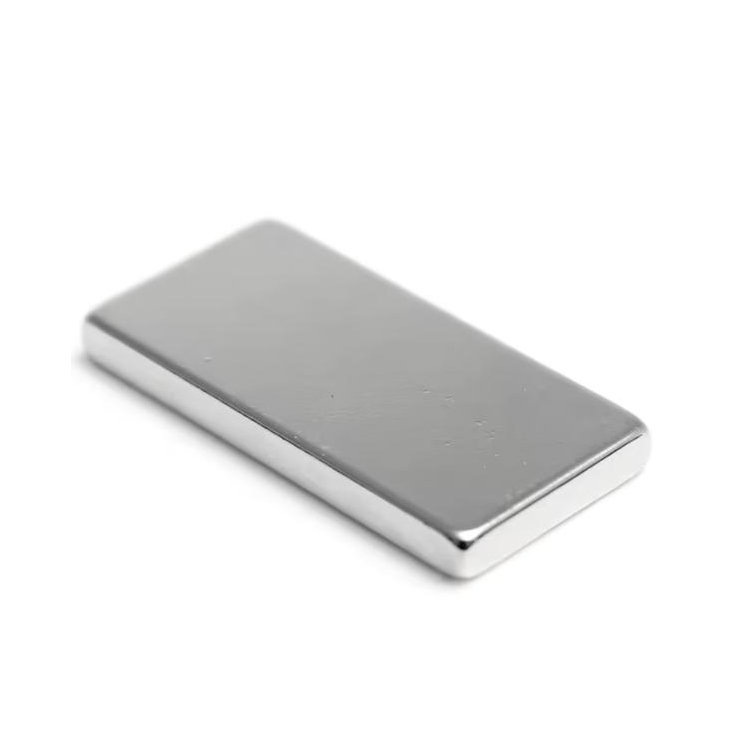
- Blocks/Rectangles:Suitable for directional magnetic fields
- Arc Segments:Specifically designed for motors
- Custom Shapes:Tailored to product structure
4.2 Surface Treatment Options
| Coating Type | Corrosion Resistance | Application Scenarios |
| Zinc Plating | Good | General indoor environments |
| Nickel Plating | Excellent | Consumer electronics |
| Epoxy Coating | Outstanding | Humid environments |
| Passivation | Basic | Temporary protection |
Part Five: Considerations from Selection to Mass Production
5.1 Sample Validation Stage
- Test actual holding force and magnetic performance against specifications
- Verify assembly process compatibility
- Check for magnetic interference with surrounding electronic devices
5.2 Reliability Testing
- High and low temperature cycle testing
- Damp heat aging testing
- Drop/vibration testing
- Corrosion resistance salt spray testing
5.3 Mass Production Considerations
- Clarify dimensional tolerances and inspection standards
- Establish batch traceability system
- Consider alternative supply chain options
Conclusion:
Selecting the right magnet is a balance between product functionality, cost control, and reliability. We hope this guide helps you better understand the key elements of magnet selection and find the most suitable magnetic solution for your product.
If you have specific magnet purchasing questions, please consult our professional sales team at Dahua.
Dahua Magnetic—China’s Leading Magnetic Manufacturer, Your Most Reliable Magnet Partner!