What Is the Custom Magnet Manufacturing Process?
When a standard magnet does not quite fit a product, a custom magnet can be a better solution. But how are custom magnets actually made?
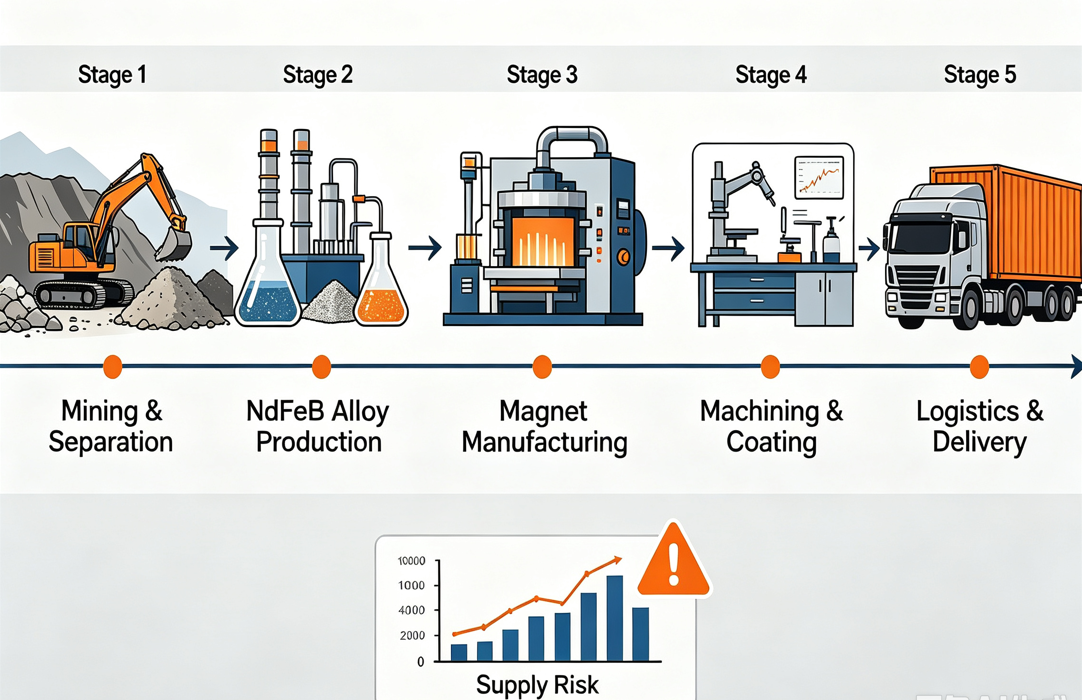
The custom magnet manufacturing process usually includes material selection, design, machining, magnetization, inspection, and, when needed, assembly. Each step affects the final performance of the magnet, so working with an experienced manufacturer is important, especially for OEM and ODM projects.
With 35+ years of experience, DAWA provides custom magnet solutions for a wide range of industries, from consumer electronics and motors to automotive, medical equipment, and toys.
The process starts with the customer’s requirements.Engineers usually need information such as the magnet’s dimensions, magnetic strength, working temperature, application environment, magnetization direction, and installation method. Product drawings or samples can also help the manufacturer understand the actual application.
At this stage, engineers may suggest changes to the design if they see potential manufacturing or performance issues. This early communication can save time later and help the customer move from prototype to mass production more smoothly.
Different applications require different magnet materials. For example, neodymium magnets are often selected when high magnetic strength is needed in a small space. Ferrite magnets can be a practical option when cost and temperature stability are important.
The choice also depends on the working environment, required magnetic performance, size, corrosion resistance, and target cost. An experienced magnet manufacturer can help customers balance these factors instead of simply choosing the strongest available material.
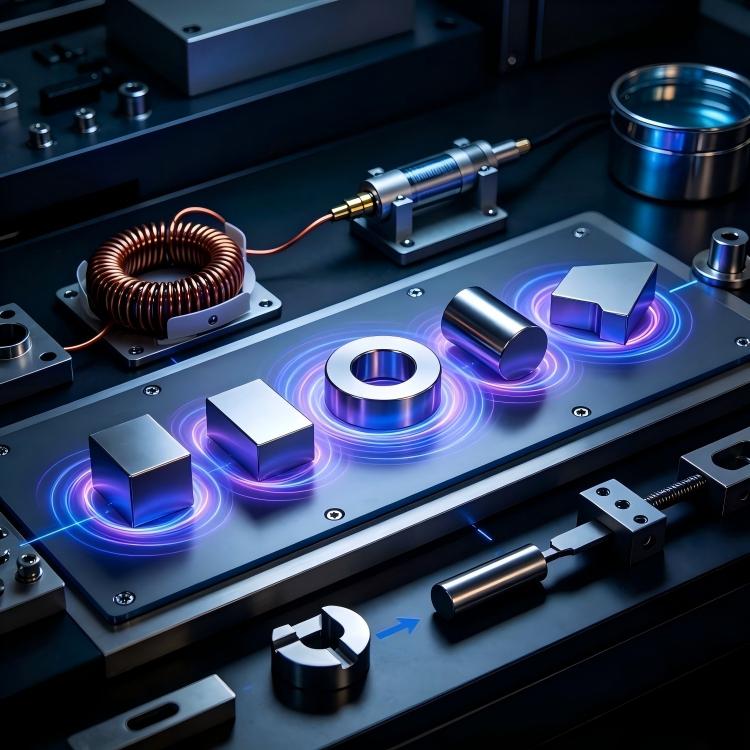
Once the material and design are confirmed, the magnet enters production. Depending on the material and shape, the manufacturing process may include forming, sintering, cutting, grinding, drilling, or other precision machining processes. Custom magnets can be produced in different shapes and sizes, including discs, rings, blocks, arcs, and application-specific designs. Dimensional accuracy is especially important when the magnet needs to fit into a compact product. Even a small variation can affect assembly or magnetic performance.
After production and magnetization, the magnets are inspected to make sure they meet the agreed specifications. Depending on the project, inspection may include dimensions, magnetic performance, surface condition, coating, and magnetization direction.
For B2B customers, consistency is just as important as the performance of an individual sample. A reliable manufacturing process should provide stable quality across different production batches. DAWA follows established quality management procedures and holds ISO9001, ISO14001, IATF16949, and SGS Recycle certifications.
Some customers need more than individual magnets. The magnets may need to be assembled with other components before delivery.
DAWA has experience in R&D, manufacturing, magnetization, and assembly, allowing the company to support customers through different stages of product development. Its engineering team can also provide magnet application solutions based on the customer’s product structure and requirements. This can help identify problems earlier and shorten the development cycle.
DAWA is a professional magnet manufacturer with 35+ years of experience in magnet R&D and manufacturing.
The company has worked with applications across consumer electronics, electro-acoustic products, home appliances, motors, automotive, medical equipment, toys, and other fields. DAWA was also one of the early companies involved in the R&D and manufacturing of magnets for headphones, electronic cigarettes, and toys. Over the years, this has helped build strong experience in precision magnet design, manufacturing, magnetization, and assembly.
For customers with specific magnetic requirements, DAWA can provide customized solutions from the initial design stage through mass production.
With 35+ years of experience and capabilities covering R&D, manufacturing, magnetization, and assembly, DAWA provides custom magnet solutions designed around real product requirements.
For more information, technical specifications, or to request samples, visit the DAWA Magnet website or contact our sales team directly.
Dawa Jiahao, facilitate innovation and mass production