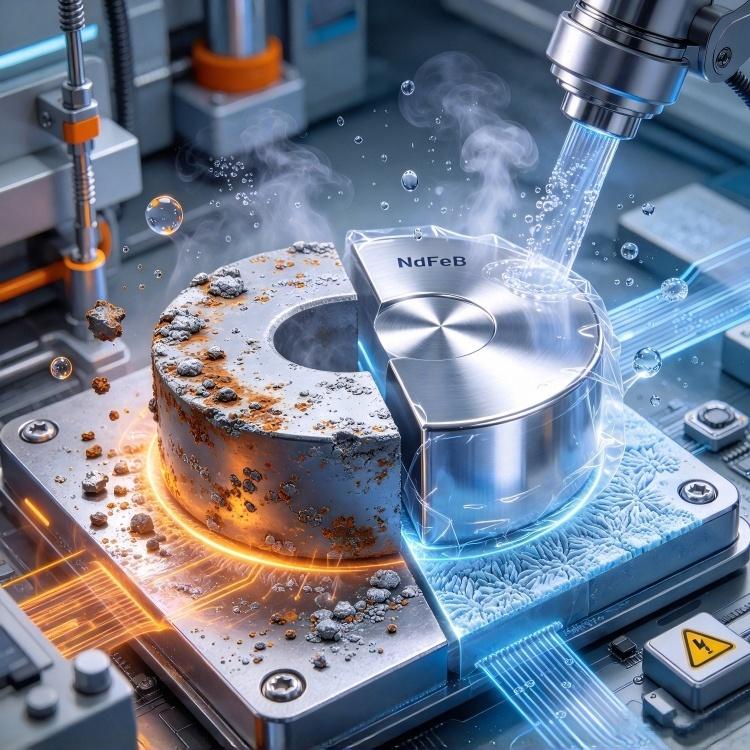
1. What Is Magnetization? Like Charging a Battery 🔋
Think of a magnet as a magnetic energy battery:
- Before magnetization: Like a dead battery—it looks the same, but has no magnetic power.
- Magnetization process: The material is placed into a magnetizer, like plugging into a charger. When current flows, the tiny magnetic domains inside are activated and aligned in one direction.
- After magnetization: Like a fully charged battery, it now has the power to attract metal.
Simply Put:
Magnetization is the process of making all the tiny magnetic needles inside a magnet point in the same direction.
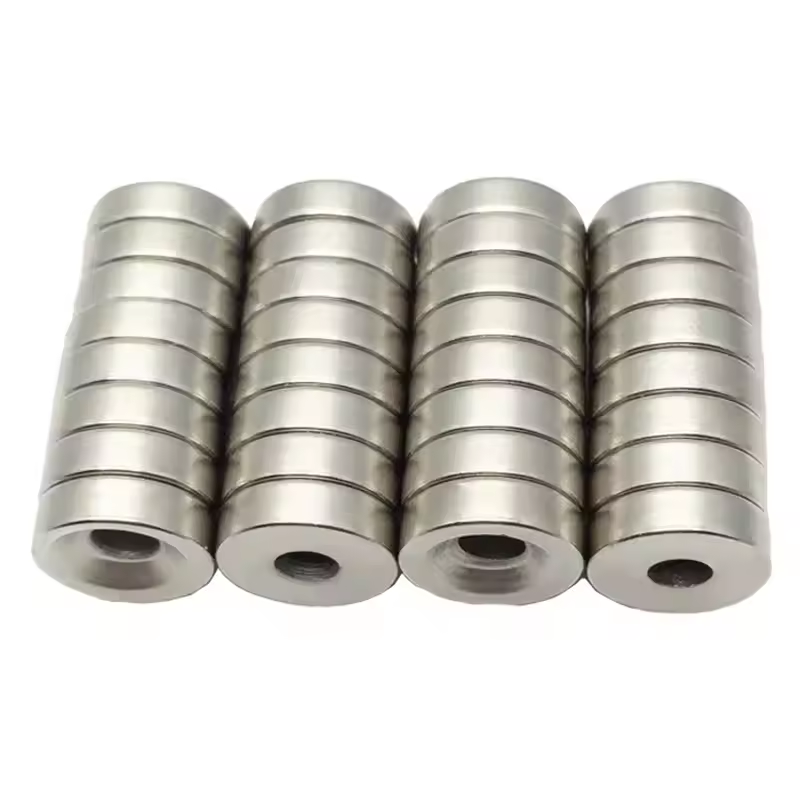
2. Magnetization Direction: Where Does the Magnetic Force Go? 🧲
Based on magnetization direction, there are four common types:
1. Single Pole Magnetization (Most Common)
Only one pair of N/S poles exists on the same magnet.
- Axial magnetization: Like the top and bottom of a coin
- Radial magnetization: Like the inner and outer walls of a cylinder (ideal for motors)
Simple Rule:
North is north, south is south, single direction.
2. Multi-Pole Magnetization
Multiple N/S poles appear alternately on the same surface, like zebra stripes.
Benefits:
- Stronger holding force at the same thickness
- Both sides can attract metal
Applications:
- Ultra-thin refrigerator magnets
- Magnetic whiteboards
- Phone holders
3. Radial Magnetization
Magnetic field radiates outward from the center or converges inward from the outside.
Applications:
- High-performance motors
- Smoother rotation
- Lower operating noise
4. Halbach Array
Through a special magnetic arrangement:
- One side has an extremely strong magnetic field
- The other side has nearly zero magnetic field
Benefits:
Directional transmission of magnetic force without shielding.
Applications:
- Magnetic levitation speakers
- Maglev trains
- MRI systems
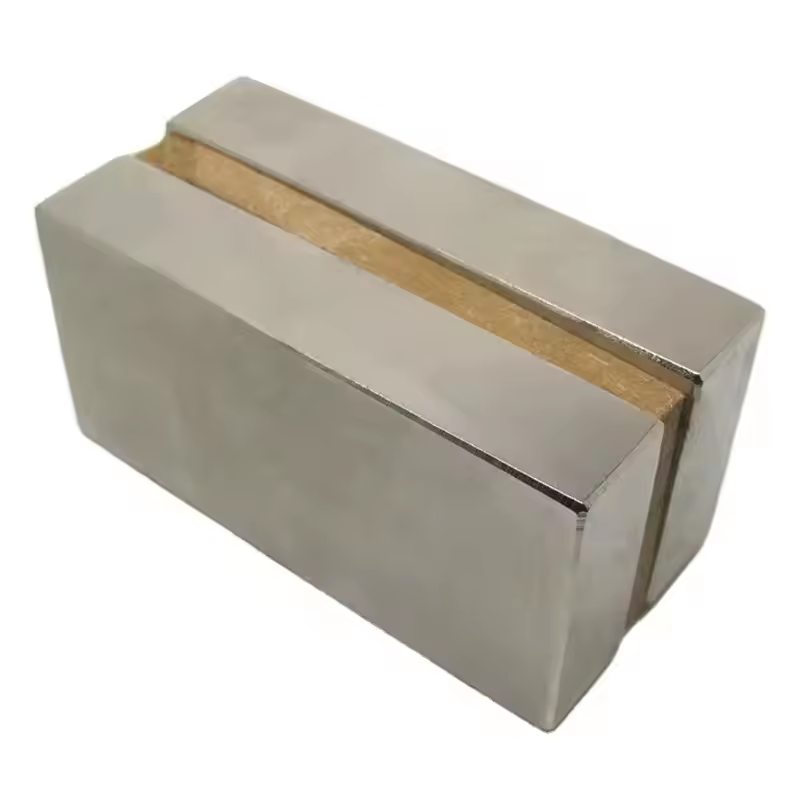
3. Magnetization Facts ⚙️
How Is Magnetization Done?
A large current is discharged instantly, creating a strong pulse magnetic field that aligns the magnetic domains.
What Makes Magnetization Difficult?
- The smaller the diameter, the harder the magnetization
- Thin magnets generally use axial magnetization
- Cylinders where thickness > diameter generally use radial magnetization
4. How to Choose the Right Magnetization Method? 📋
| Magnetization Method | Characteristics | Typical Products |
|---|---|---|
| Axial Magnetization | Top and bottom poles, ideal for thin pieces | Disc magnets, magnetic buttons |
| Radial Magnetization | Front and back poles, ideal for cylinders | Motor rotors, sensors |
| Multi-Pole Magnetization | Multiple poles on surface, strong holding force | Magnetic whiteboards, flexible sheets |
| Radial Field Magnetization | Radiating magnetic field | High-performance motors |
| Halbach Array | Single-side magnetic field | Magnetic levitation, MRI |
5. One Sentence Summary ✅
Magnetization is getting the inside of a magnet to line up.
The alignment direction determines how the magnet attracts and how strong that attraction will be.
Need Help Choosing the Right Magnet?
Tell us what product you are making, and Dahua Magnetic will help you find the ideal solution.
Dahua Magnetic
China’s Leading Magnetic Manufacturer — Your Most Reliable Magnet Partner!