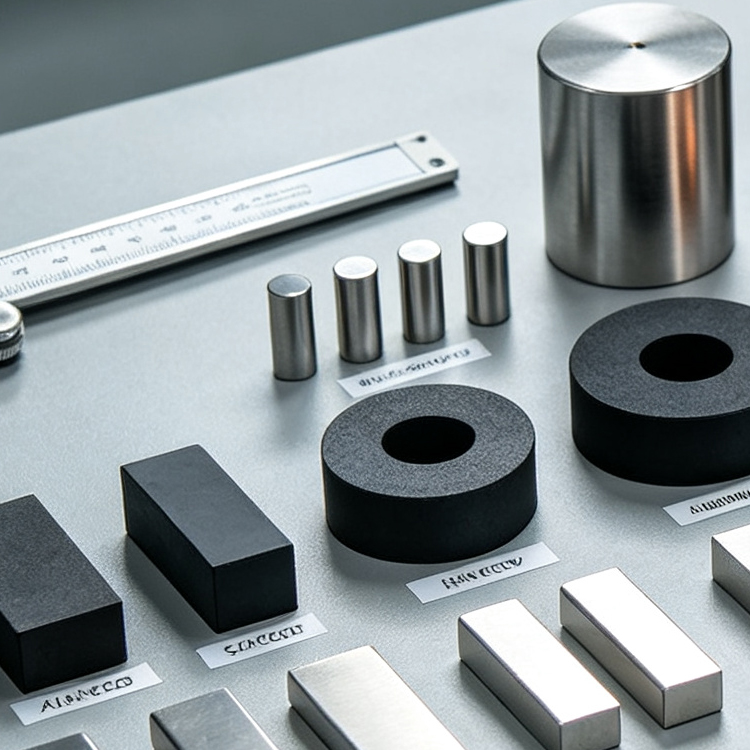
In industrial manufacturing and magnetic component applications, many buyers encounter a common question:
Why do magnets with exactly the same dimensions have completely different magnetic strength?
For example, two neodymium magnets with the same size — such as 20×10×5 mm — may show significantly different holding force and magnetic performance. This difference is especially important in industries such as electronics, motors, automation equipment, packaging, and consumer devices.
In reality, having the same dimensions does not mean magnets have the same magnetic properties. Magnetic strength is influenced by several factors including material grade, magnetic performance parameters, magnetization direction, and manufacturing quality.
As a professional magnetic manufacturer, DAWA helps customers select suitable magnets based on actual industrial application requirements rather than size alone.
Why Can Magnets of the Same Size Have Different Magnetic Force?
Many people assume that larger magnets always have stronger magnetic force. However, magnetic strength depends not only on size, but also on magnetic material performance.
For example:
| Magnet Grade | Size | Magnetic Performance |
|---|---|---|
| N35 Neodymium Magnet | 20×10×5 mm | Standard magnetic force |
| N52 Neodymium Magnet | 20×10×5 mm | Much stronger magnetic force |
Although the dimensions are identical, the magnetic energy product (BHmax) is different, which directly affects magnetic strength.

Key Factors That Affect Magnetic Strength
1. Magnet Grade (Most Important Factor)
Magnet grade is one of the biggest reasons why magnets of the same size can have different strength.
Common neodymium magnet grades include:
- N35
- N38
- N42
- N45
- N48
- N52
Generally:
The higher the grade number, the stronger the magnetic performance.
For example:
- N52 magnets usually provide significantly stronger magnetic force than N35 magnets of the same dimensions.
Therefore, checking the magnet grade is essential when comparing magnetic strength.
2. Residual Flux Density (Br)
Residual flux density (Br) measures the magnetic induction strength after magnetization.
Higher Br values usually mean:
- Stronger magnetic field
- Greater holding force
- Better magnetic performance
High-performance neodymium magnets typically have higher Br values.
3. Coercivity (Hcb / Hcj)
Coercivity refers to a magnet’s resistance to demagnetization.
Magnets with higher coercivity:
- Maintain magnetic strength more effectively
- Perform better in high-temperature environments
- Offer improved long-term stability
This parameter is especially important in industrial and motor applications.
4. Magnetization Direction
Even when two magnets have the same size and material grade, different magnetization directions can affect actual magnetic performance.
Common magnetization types include:
- Axial magnetization
- Thickness magnetization
- Radial magnetization
- Multi-pole magnetization
Different magnetization methods can significantly change the magnetic field distribution and practical holding force.
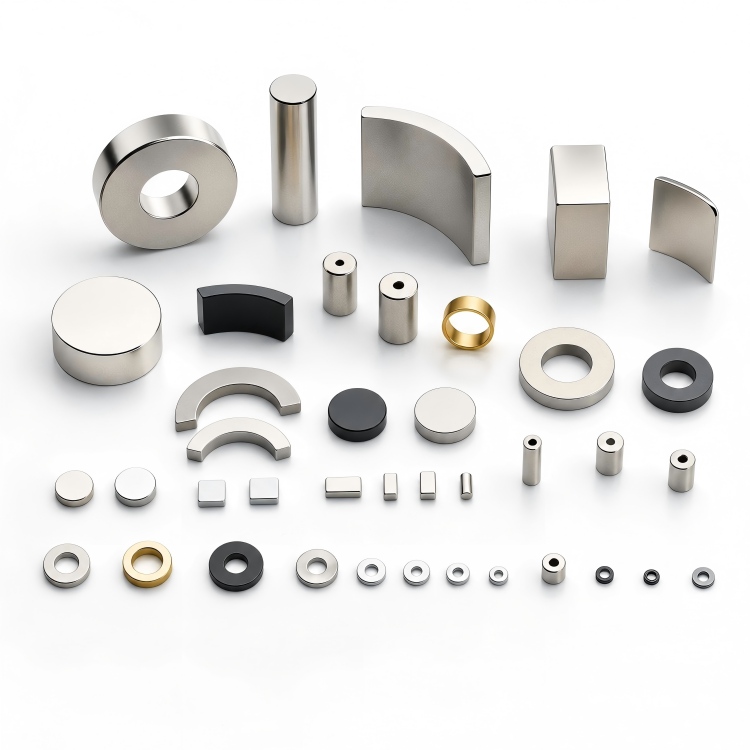
How to Quickly Distinguish Magnetic Strength Differences?
Method 1: Check the Magnet Grade
This is the simplest and fastest method.
Examples:
- N35
- N42
- N52
Higher grades usually indicate stronger magnetic force.
Method 2: Use a Gauss Meter
A gauss meter can measure:
- Surface magnetic field
- Magnetic flux density
- Field intensity
This is one of the most accurate industrial testing methods.
Method 3: Perform Pull Force Testing
Pull force testing compares:
- Holding strength
- Attraction force
- Load-bearing capability
This helps determine the actual performance difference between magnets.
Method 4: Review Manufacturer Test Reports
Professional magnet manufacturers usually provide:
- BH curves
- Magnetic performance reports
- Material certification
These documents help buyers accurately compare magnet quality and strength.
DAWA recommends requesting magnetic testing reports before purchasing industrial-grade magnets for critical applications.
Why Magnetic Strength Matters in Industrial Applications
Even small differences in magnetic force can directly affect product performance.
Motor Industry
Insufficient magnetic strength may cause:
- Lower torque
- Reduced efficiency
- Performance instability
Consumer Electronics
Weak magnetic force may lead to:
- Poor attachment
- Unstable positioning
- Structural looseness
Automation Equipment
Magnetic differences can influence:
- Sensor accuracy
- Robotic gripping stability
- Mechanical precision
That is why industrial buyers should focus not only on size, but also on magnetic performance parameters.
Choosing Magnets Requires More Than Size Comparison
Many buyers only compare:
- Dimensions
- Appearance
- Coating
However, the most important performance factors are:
- Magnet grade
- Magnetic energy product
- Coercivity
- Working temperature
- Magnetization direction
Understanding these parameters helps ensure the correct magnet selection for specific industrial applications.
Conclusion:
Magnets with the same dimensions do not necessarily have the same magnetic strength.
Key factors affecting magnetic performance include:
- Magnet grade
- Residual flux density (Br)
- Coercivity
- Magnetization direction
- Material quality
For industries such as electronics, automation, and manufacturing, properly identifying magnetic strength differences is essential for product stability and performance.
When purchasing magnets, it is important to evaluate not only the size, but also the complete magnetic performance specifications. With professional manufacturing experience, DAWA provides customized magnetic solutions for various industrial applications requiring reliable and consistent magnetic performance.