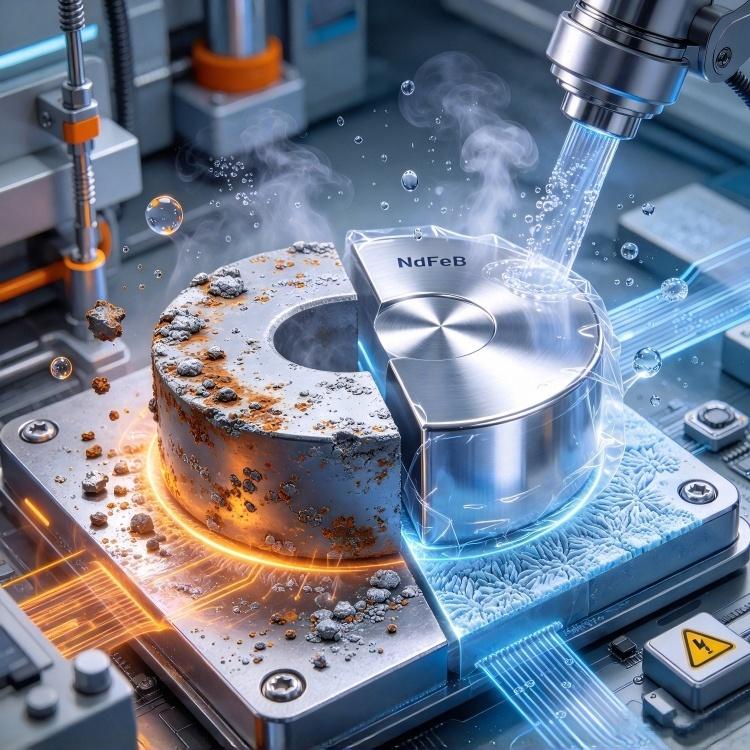
In modern industrial applications, magnets are expected to perform reliably in increasingly complex environments. From electric motors and sensors to automation systems and consumer electronics, magnetic components must maintain stable performance over time while resisting corrosion, wear, and environmental stress.
While the magnetic material itself determines the core performance of a product, it is often the surface coating that ensures long-term stability and durability. For manufacturers like DAWA, surface treatment is not an optional step—it is a critical part of ensuring consistent quality in every industrial permanent magnet delivered to customers worldwide.
The Real Role of Surface Coating in Magnet Performance
A magnet’s base material provides magnetic strength, but without proper protection, it can degrade quickly when exposed to moisture, oxygen, or chemicals. This is especially true for high-performance NdFeB neodymium magnet products, which are known for strong magnetic force but relatively high corrosion sensitivity.
Surface coating acts as a protective barrier that:
- Prevents oxidation and corrosion
- Improves mechanical durability
- Enhances surface stability in harsh environments
- Extends service life of the magnet
In many cases, the difference between a standard magnet and a high-reliability rare earth magnet is not only the material grade, but also the quality of its surface treatment.

Common Functions of Magnet Surface Treatment
A well-designed coating system does more than just protect the surface. Depending on application requirements, it can also provide:
- Improved corrosion resistance in humid or outdoor environments
- Better adhesion for bonding or assembly processes
- Enhanced electrical insulation or controlled conductivity
- Improved appearance for consumer-facing products
For industrial users, these functions directly affect product performance, reliability, and cost efficiency over the full lifecycle.

Selecting the Right Coating in Three Steps
Choosing the correct surface treatment is a technical decision that should always be based on application requirements. At DAWA, we guide customers through a simple but effective selection process.
Step 1: Assess the Operating Environment
The first question is always about environmental conditions:
- Is the environment dry or humid?
- Will the magnet be exposed to water, oil, or chemicals?
- Will the product operate under high temperatures?
- Is it intended for indoor or outdoor use?
Environmental exposure directly determines the level of protection required for the neodymium magnet manufacturer to recommend the right coating solution.
Step 2: Identify Special Requirements
Next, it is important to define functional requirements beyond basic protection:
- Does the application require welding or bonding?
- Is electrical conductivity or insulation necessary?
- Are there mechanical hardness or wear resistance requirements?
Different coating materials can significantly influence how the magnet interacts with surrounding components in an industrial permanent magnet system.
Step 3: Evaluate Product Characteristics
Finally, the physical design of the magnet must be considered:
- Does the product include perforations or complex shapes?
- What are the dimensions and thickness?
- Is it a small precision component or a large industrial part?
These factors affect coating uniformity, adhesion quality, and overall performance consistency of the NdFeB neodymium magnet during production and usage.

Why Surface Coating Matters in Real Applications
In real-world industrial environments, magnets are often exposed to continuous stress conditions. Without proper coating, even high-grade magnetic materials can experience degradation over time.
For example:
- Humidity can cause surface oxidation
- Chemical exposure can weaken structural integrity
- Temperature fluctuations can affect coating stability
This is why surface treatment is considered a key factor in ensuring the long-term reliability of a rare earth magnet used in demanding applications.
DAWA’s Approach to Magnet Surface Quality
As a professional neodymium magnet manufacturer, DAWA focuses on delivering stable and application-specific magnetic solutions.
Our surface treatment process is designed to ensure:
- Consistent coating thickness
- Strong corrosion resistance
- Stable performance in industrial environments
- Compatibility with different application requirements
By carefully controlling both material selection and surface engineering, we help customers achieve higher reliability in their industrial permanent magnet applications.
Conclusion:
Surface coating is not just a finishing step—it is a critical factor that determines how long and how reliably a magnet will perform in real applications. From corrosion resistance to functional compatibility, the right coating directly impacts product stability and lifecycle performance. By following a structured selection process and working with an experienced partner like DAWA, users can ensure that every NdFeB neodymium magnet and rare earth magnet performs consistently, even in challenging industrial environments.