What Should You Check Before Choosing a Custom Permanent Magnet Manufacturer?
Finding a permanent magnet supplier is easy. Finding one that can make the magnet you actually need, and keep making it the same way after the first order, is a different matter.
This becomes obvious when a project moves beyond standard disc or block magnets. An OEM drawing may specify an unusual shape, a tight tolerance, a particular coating, a defined magnetization direction, or a certain magnetic grade. Sometimes several of these requirements come together in one small component.
That is when the choice of manufacturer starts to matter.
It is common to start a quotation with a simple requirement such as N52 neodymium magnet. But N52 alone does not tell a manufacturer everything it needs to know.
The final magnet may need a specific length and thickness, a particular coating, a defined pole orientation, or a shape designed around another component. Operating temperature and the surrounding environment may also affect the choice of material.
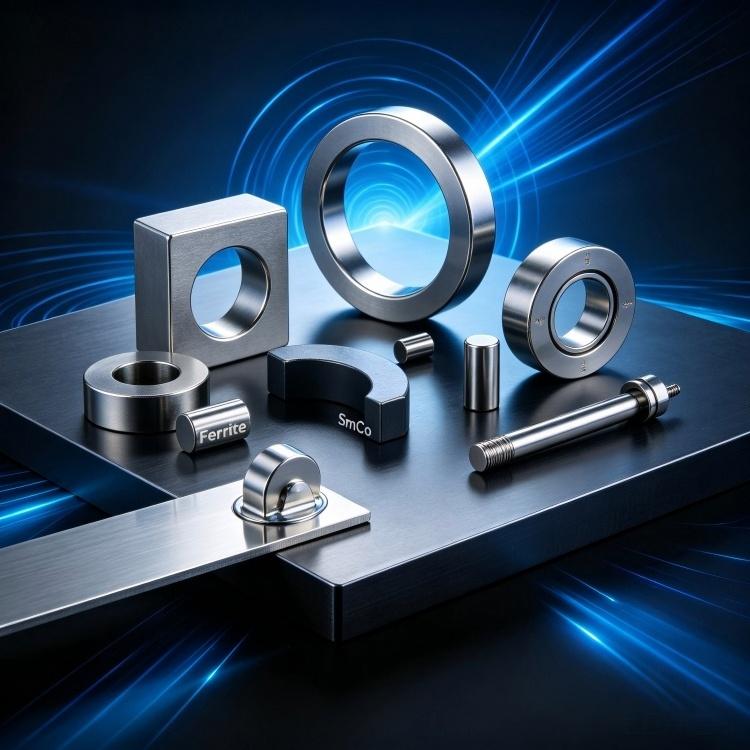
For one project, high-energy NdFeB may be the obvious option because space is limited. Another application may be better suited to SmCo because temperature stability is more important. Ferrite can make more sense when the design allows more space and keeping material cost under control is a priority.
In other words, the magnet should be selected around the application rather than around the highest grade available.
A custom magnet can look simple on a drawing but still require several manufacturing steps.
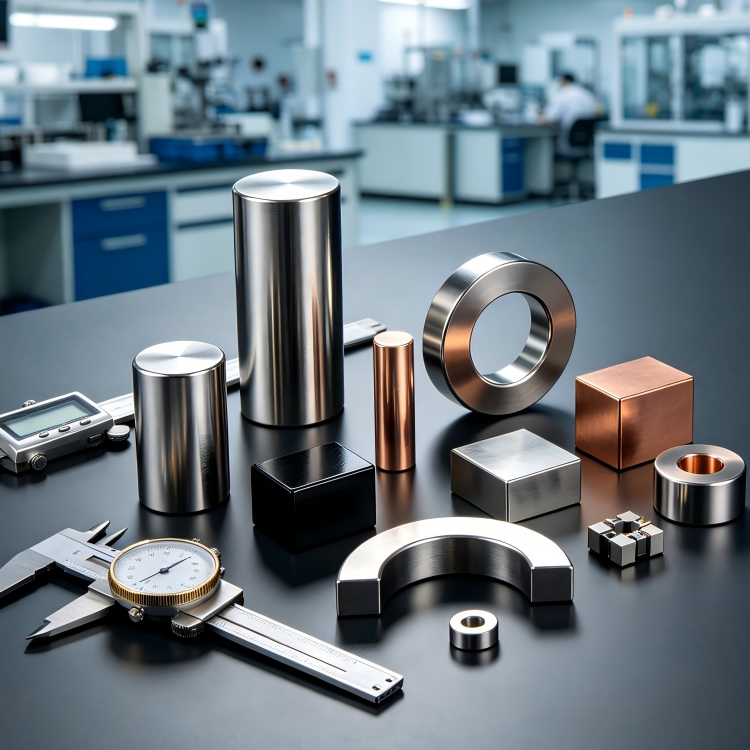
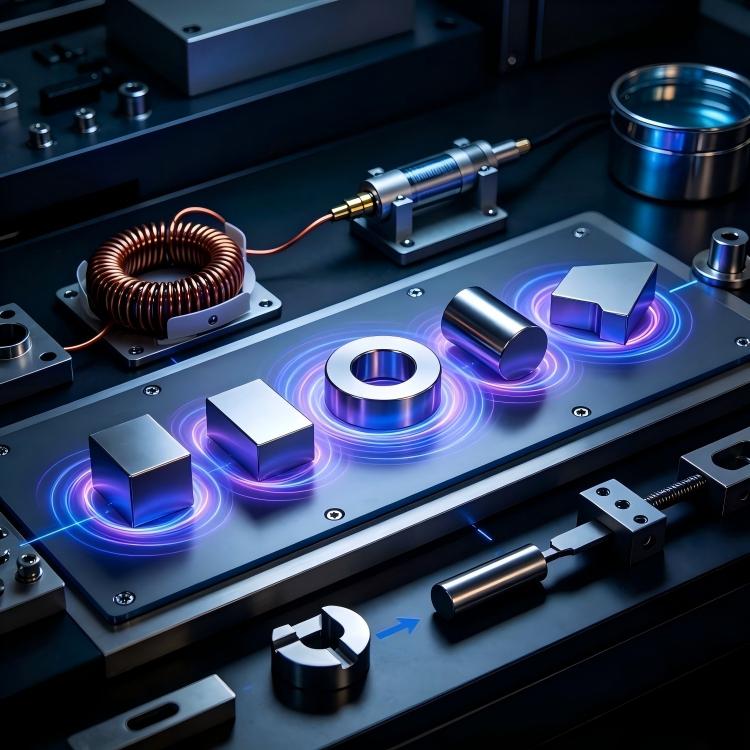
Depending on the material and design, production may involve sintering, cutting, grinding, CNC machining, coating, magnetizing, and final inspection. A ring magnet with a small center hole, for example, may require different machining considerations from a standard block. An arc magnet for a motor has its own requirements for geometry and magnetization.
This is particularly important when the magnet has to fit directly into an assembly. A small dimensional difference may affect the air gap, positioning, or final magnetic performance.
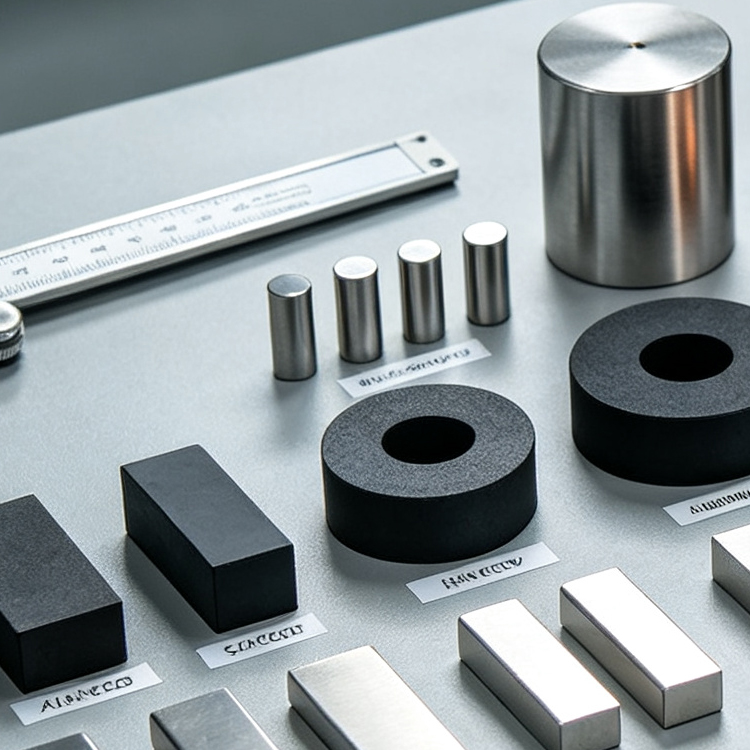
DAWA Magnetoelectricity works with several permanent magnet materials, including sintered NdFeB, ferrite, SmCo, AlNiCo, rubber magnets, and bonded NdFeB. Its production capabilities also cover machining, plating, magnetizing, and magnetic assemblies.
For an engineering team, having these processes available through one manufacturer can make a custom project easier to coordinate.
A sample only answers part of the question.
It can tell you whether the magnet fits the drawing and whether the initial magnetic performance is close to the target. The harder question comes later: can the manufacturer produce the same result repeatedly?
This matters particularly for motors, sensors, automotive components, and other products where magnets are installed in large quantities. If dimensions or magnetic characteristics vary too much between batches, the problem may eventually show up during assembly or product testing.
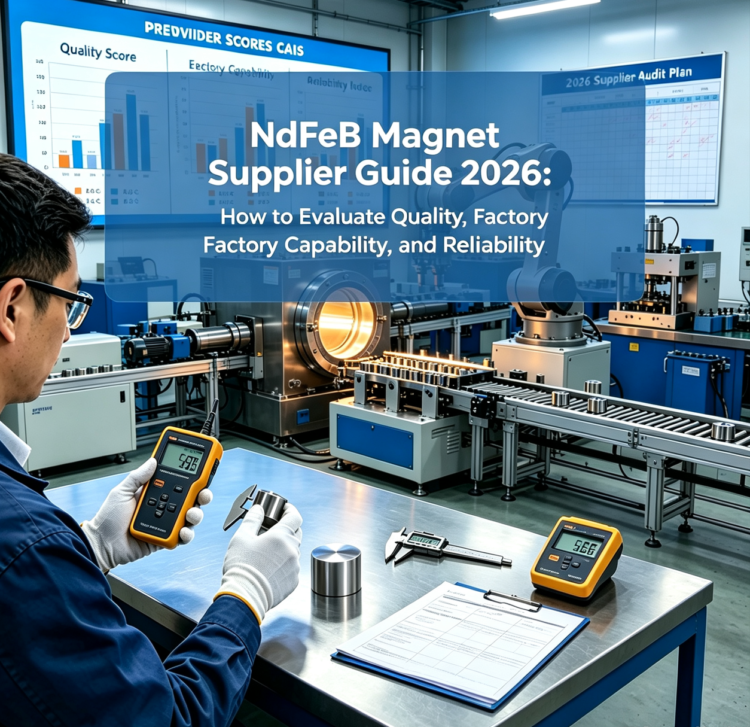
That is why it is worth looking at the manufacturer’s production and inspection process before placing a larger order.
DAWA supports prototype and sample production, with sample turnaround stated at around 3–5 working days for suitable projects. Its quality system includes inspection of materials and finished products, along with testing related to magnetic performance and coating durability.
A magnet supplier that works well for a sample order may not necessarily be the right supplier for mass production.
Before moving forward, OEM buyers should consider how the manufacturer handles larger quantities, repeat orders, packaging, tolerances, and changes to the drawing. It is also useful to know whether the same factory can support a different magnet material or related assembly later in the project.
This is one area where DAWA’s relatively broad product range can be useful. The company produces several major permanent magnet materials and also works with different magnet shapes, including blocks, discs, rings, arcs, cylinders, and custom profiles.
For a project involving several magnetic components, having these requirements handled through the same manufacturer can reduce some of the back-and-forth between suppliers.
Some customers need more than individual magnets. The magnets may need to be assembled with other components before delivery.
DAWA has experience in R&D, manufacturing, magnetization, and assembly, allowing the company to support customers through different stages of product development. Its engineering team can also provide magnet application solutions based on the customer’s product structure and requirements. This can help identify problems earlier and shorten the development cycle.
The cheapest quotation is not always the cheapest option once a project is in production.
A magnet that needs to be reworked because of dimensional issues, a coating problem, inconsistent magnetic performance, or a delayed delivery can cost much more than the original price difference.
For that reason, a useful supplier should be able to discuss the application, review drawings, recommend suitable materials when necessary, produce samples, and then maintain the agreed specification during regular production.
DAWA has been manufacturing permanent magnets since 1991 and supplies magnets for applications including motors, automotive components, electronics, sensors, medical equipment, home appliances, and renewable-energy equipment. Its quality management certifications include ISO 9001, ISO 14001, and IATF 16949.
For a standard magnet, the buying decision may come down to price and availability. For a custom magnet, the more important question is whether the manufacturer can turn a drawing into a consistent component—and continue doing it when the order becomes much larger.
Dawa Jiahao, facilitate innovation and mass production