Full-Range Permanent Magnet Solutions: Why Partner With DAWA Magnet Manufacturer
Choosing a permanent magnet supplier is rarely just a matter of finding the lowest price. For industrial designers, OEM buyers, and hardware manufacturers, the bigger concerns usually come later: Will the magnetic performance remain consistent from batch to batch? Can the supplier make the exact shape required by the design? What happens when the project moves from a few samples to thousands of pieces?
These questions become even more important when a product uses different types of magnets across several components. Working with multiple suppliers may seem straightforward at first, but it can also mean dealing with different quality standards, production schedules, coatings, packaging requirements, and communication processes.
This is one reason Guangdong Dawa Magnetoelectricity Co., Ltd. (DAWA), a permanent magnet manufacturer established in 1991, has developed a relatively broad manufacturing range.
Permanent magnets are not interchangeable. The right material depends on the required magnetic strength, operating temperature, cost, mechanical design, and working environment.
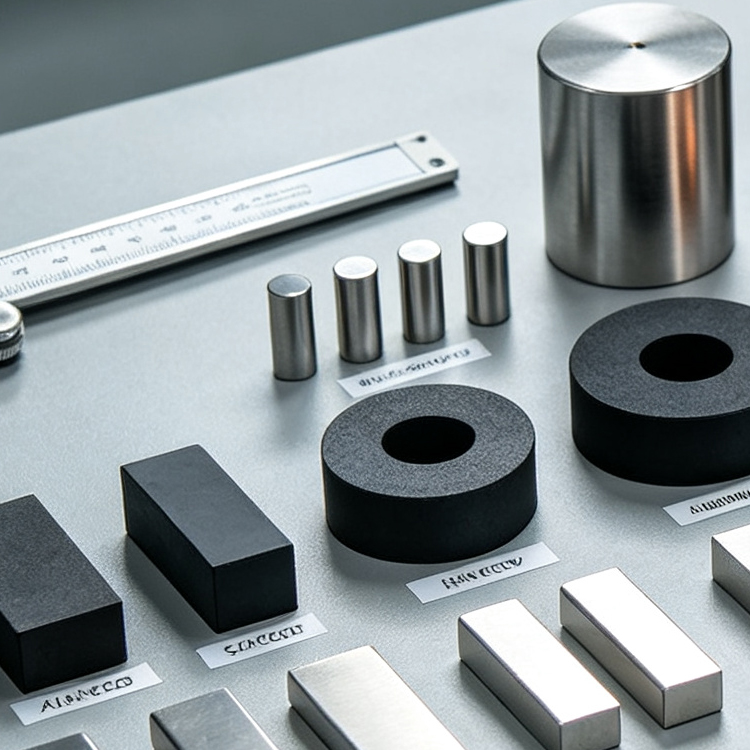
DAWA manufactures several major permanent magnet materials, including sintered NdFeB, ferrite magnets, flexible rubber magnets, sintered SmCo, AlNiCo, and bonded NdFeB. The company also produces custom magnet assemblies for applications where a standard magnet cannot meet the design requirements.
For example, NdFeB is often selected when a compact component needs high magnetic force. SmCo becomes more relevant when temperature resistance and magnetic stability are important. Ferrite remains a practical choice for applications where cost and volume are major considerations, while flexible magnets can be useful for signage, displays, and products requiring a bendable magnetic material.
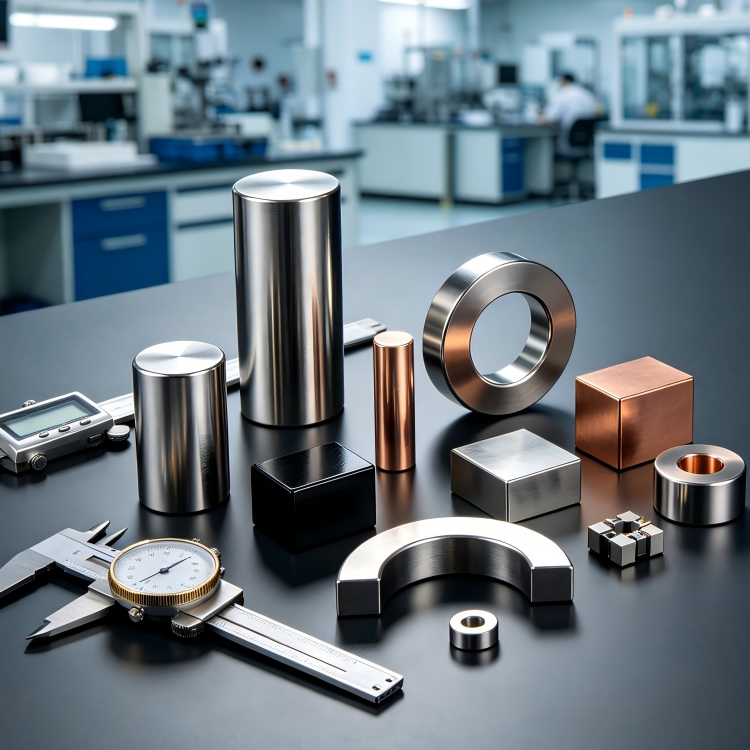
The same principle applies to shape. Depending on the application, DAWA can produce disc, block, ring, arc, cylinder, and irregularly shaped magnets, as well as components based on customer drawings.
Having these options under one manufacturing system can make material selection easier, particularly for OEM projects where several magnet specifications are required.
Manufacturing Capability Matters More Than a Product List
A supplier may have dozens of magnet products on its website, but that does not necessarily mean it can control the entire production process.
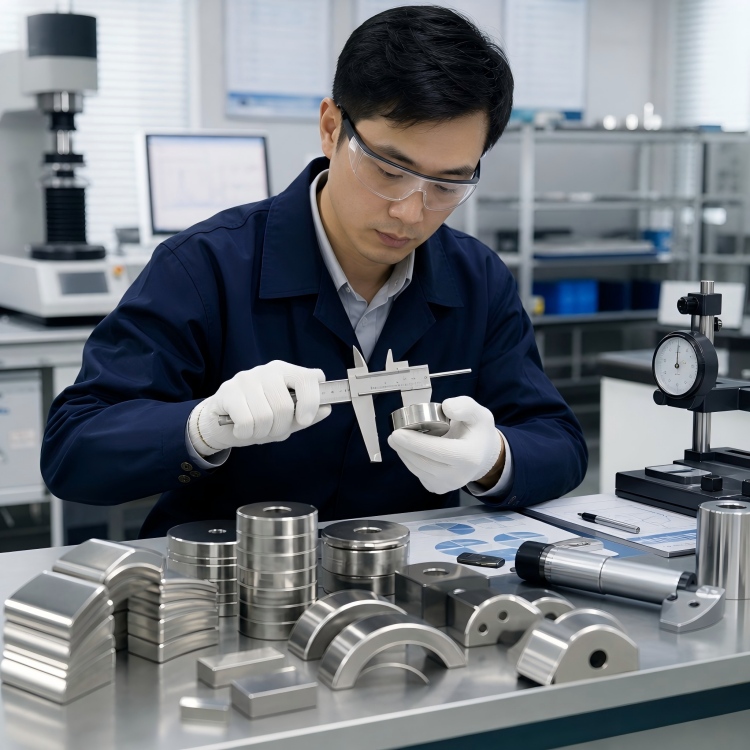
For custom magnets, several stages can affect the final result. DAWA’s manufacturing workflow includes vacuum sintering, multi-wire slicing, CNC machining, surface plating, magnetizing, and finished-product warehousing.
This matters when a magnet needs to meet specific dimensional tolerances or magnetic requirements. A change in thickness, hole diameter, magnetizing direction, or surface treatment can affect how the component performs after assembly.
Keeping these processes within the factory also gives the manufacturer more control over production coordination. Instead of sending a semi-finished magnet to different suppliers for machining, coating, and magnetizing, the major steps can be managed within the same production system.
For OEM buyers, this can reduce one common sourcing problem: having to coordinate several vendors for what is essentially one magnetic component.
Custom Magnets Start With the Application
Not every custom magnet project starts with a simple request such as “make this magnet in N52.”
In many cases, the buyer already has a drawing or an existing component and needs the magnet to fit a particular assembly. The important specifications may include the magnet grade, dimensions, tolerance, coating, magnetizing direction, working temperature, or the way the magnet interacts with surrounding parts.
DAWA supports OEM and ODM magnet production, allowing these parameters to be adjusted according to project requirements.
For prototype projects, the company states that sample production can be completed in around 3–5 working days, depending on the product and requirements. This can be useful when engineers need physical samples before approving a design for mass production.
The production scale can also move from small trial orders to larger-volume production. That transition is important because a magnet that works well as a prototype still needs to maintain its dimensional and magnetic consistency when production quantities increase.
Permanent magnets appear in far more products than the typical disc or block magnet suggests.
DAWA’s magnet components are used across applications including automotive systems, consumer electronics, medical equipment, industrial motors, sensors, home appliances, exhibitions, and renewable-energy equipment.
Motor applications, for example, may require arc or segment magnets with specific magnetizing directions. Sensors can require small magnets with tight dimensional tolerances. Automotive and industrial components may place greater emphasis on coating quality, temperature resistance, and long-term stability.
This is where having engineering support becomes useful. When a standard magnet does not fit the application, the solution may involve changing the material, shape, coating, magnetizing direction, or even developing a complete magnet assembly rather than simply increasing the magnetic grade.
Quality Control Is Part of the Sourcing Decision
For industrial magnet buyers, magnetic strength is only one part of quality.
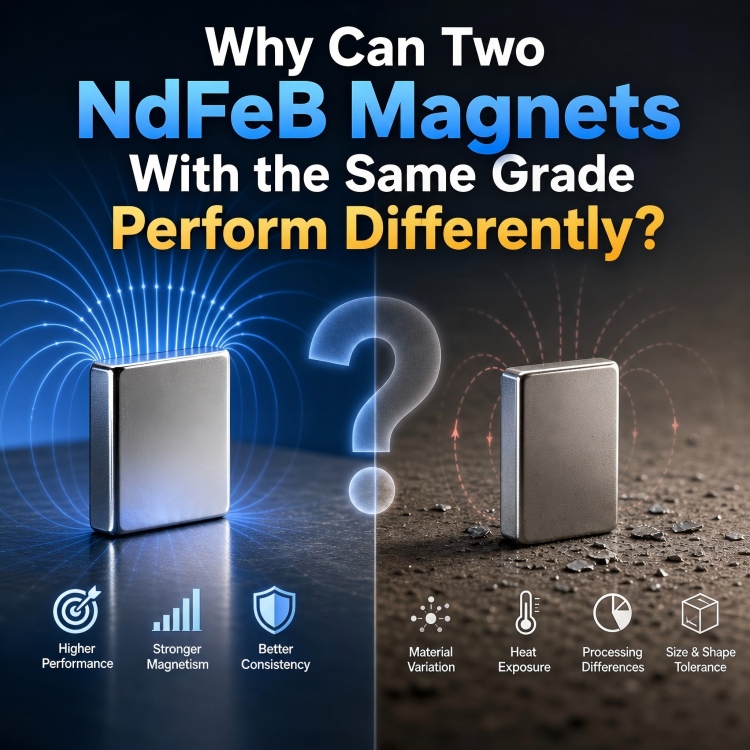
A batch can meet its nominal magnetic grade and still cause problems if dimensions vary, the coating is inconsistent, or the magnetizing direction does not match the assembly requirement. These issues may not become obvious until the magnets reach the customer’s production line.
DAWA operates under ISO 9001, ISO 14001, and IATF 16949 certification systems. These certifications are particularly relevant for buyers working with automotive, electronics, and industrial applications that require more structured quality management.
For long-term supply, the practical question is not simply whether a factory can produce one good batch. It is whether the supplier can maintain the required specifications as the order moves from samples to repeat production.
There is no single magnet material that is best for every application. NdFeB may provide the magnetic strength required for one component, while ferrite or SmCo may make more sense for another.
Working with a manufacturer that understands several magnet materials gives engineers more room to compare options before locking in a specification. It can also simplify purchasing when one project involves different magnet types or when a customer needs several customized components.
For DAWA, the value of a full-range product portfolio is therefore less about having the longest product list and more about having different material and manufacturing options available within one supply chain.
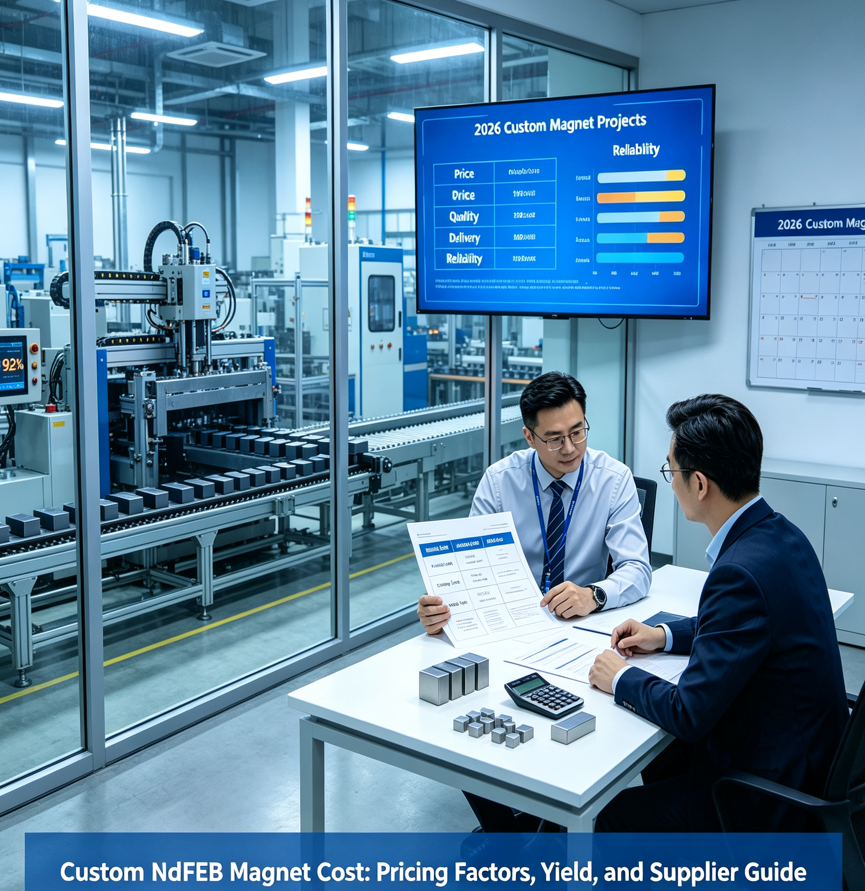
Price will always matter when purchasing permanent magnets, but it is rarely the only factor that determines the real cost of a project.
Dimensional consistency, magnetic performance, coating durability, prototype speed, production capacity, packaging, and delivery reliability can all affect the final result. A supplier that understands the application and can support the project from prototype development through repeat production can often be more useful than a supplier that only offers a low initial quotation.
With its experience in permanent magnet manufacturing since 1991, broad material range, in-house production processes, and OEM/ODM capabilities, DAWA is positioned to support both standard magnet requirements and more specialized projects.
For projects that require custom shapes, different magnet materials, or production based on engineering drawings, buyers can review DAWA’s product range or contact the manufacturer with their specifications and drawings for evaluation.
What information should I provide when requesting an NdFeB magnet quote?
Grade, shape, dimensions, tolerance, magnetization direction, coating, quantity, application, and operating temperature.
How do I choose between N35, N42, and N52?
Higher grades offer more magnetic strength in the same volume. Selection depends on available space, required flux, operating temperature, and cost.
What tolerance can a neodymium magnet manufacturer achieve?
For qualified geometries, tolerances down to ±0.02 mm are achievable. The actual tolerance depends on size, shape, coating, and critical dimensions.
What is the difference between sintered and bonded NdFeB magnets?
Sintered magnets offer higher magnetic performance but are more brittle. Bonded magnets offer design flexibility and corrosion resistance but lower energy density.
How should NdFeB magnets be packaged for international shipping?
Magnets should be packed with shielding to limit external magnetic fields, using non-magnetic spacers and clearly labeled outer packaging.
How can I test a magnet sample before mass production?
Request a sample and test it in your application. Verify magnetic properties with a hysteresisgraph if possible, and check dimensions and coating.
What is the typical lead time for custom NdFeB magnets?
Prototypes typically take 1–2 weeks; volume production may take 4–8 weeks depending on quantity and tooling requirements.
Can I switch to another NdFeB supplier without changing my motor design?
Not necessarily. The same grade from different suppliers may have different temperature coefficients and demagnetization curves. Any supplier change should be validated in the motor assembly.
Does the same NdFeB grade perform the same across suppliers?
No. Grade numbers indicate nominal performance, but actual Br, Hcj, and demagnetization curves can vary between manufacturers.
How can I reduce NdFeB supply-chain risk?
Consider qualifying a second supplier before a disruption occurs. Depending on production cycles, maintaining several weeks of safety stock for critical magnet components may also be appropriate.
Dawa Jiahao, facilitate innovation and mass production