Exploring the Coercivity Grades of Sintered NdFeB Magnets for Optimal Application Performance
According to the national standard Sintered NdFeB Permanent Magnetic Materials GB/T 13560-2017, sintered NdFeB materials are precisely categorized into seven grades (N, M, H, SH, EH, UH, TH) based on their coercivity levels to meet the requirements of various application scenarios.
- Low Coercivity (N Grade): Coercivity ranges from 870 kA/m to 1000 kA/m. These magnets are suitable for ambient temperature scenarios with no strict requirements for magnetic field stability. The maximum operating temperature should not exceed 80°C.
- Medium Coercivity (M Grade): Coercivity ranges from approximately 1000 kA/m to 1150 kA/m. Ideal for general industrial applications, such as small motors and speakers, these magnets maintain stable magnetic properties in various environments. The maximum operating temperature is 100°C.
- High Coercivity (H Grade): Coercivity ranges from approximately 1270 kA/m to 1350 kA/m. These magnets exhibit higher coercivity, making them suitable for applications requiring strong demagnetization resistance, such as devices operating under high temperatures or strong magnetic field interference. The maximum operating temperature is 120°C.
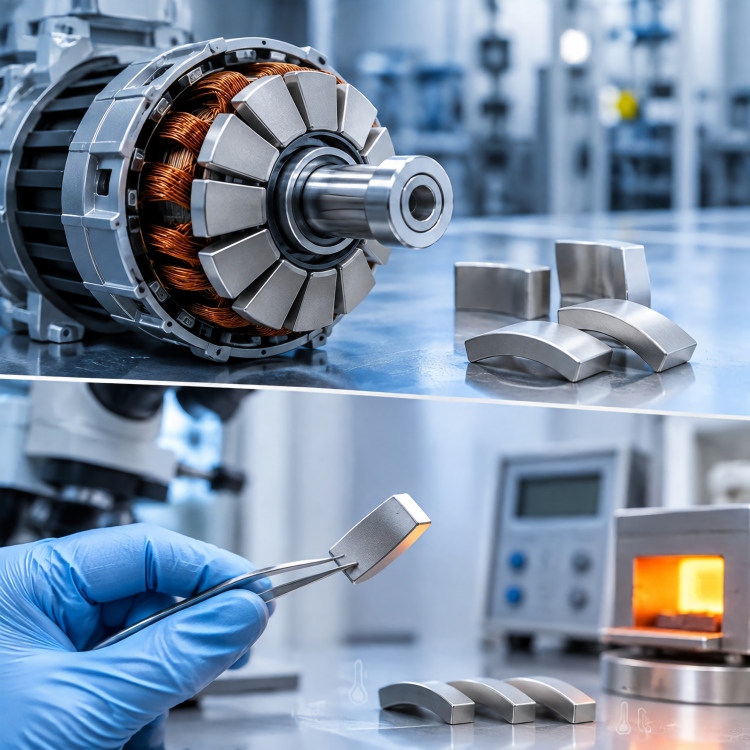
- Very High Coercivity (SH Grade): Coercivity ranges from approximately 1350 kA/m to 1590 kA/m. Suitable for more demanding environments, such as high-performance motors and certain specific sensors, with a maximum operating temperature of 150°C.
- Ultra-High Coercivity (UH Grade): Coercivity ranges from approximately 1590 kA/m to 1990 kA/m. These magnets maintain their magnetic properties under extreme conditions and are commonly used in aerospace and large motors. The maximum operating temperature is 180°C.
- Extremely High Coercivity (EH Grade): Coercivity ranges from approximately 1990 kA/m to 2380 kA/m. With exceptional coercivity, these magnets are used in high-tech fields requiring extreme magnetic performance, such as precision instruments and specialized motors. The maximum operating temperature is 200°C.
- Highest Coercivity (TH Grade): Coercivity ranges from 2380 kA/m to 2780 kA/m. This is the highest level of coercivity classification, representing the pinnacle of NdFeB materials’ resistance to demagnetization, mainly used for critical applications in specialized environments.
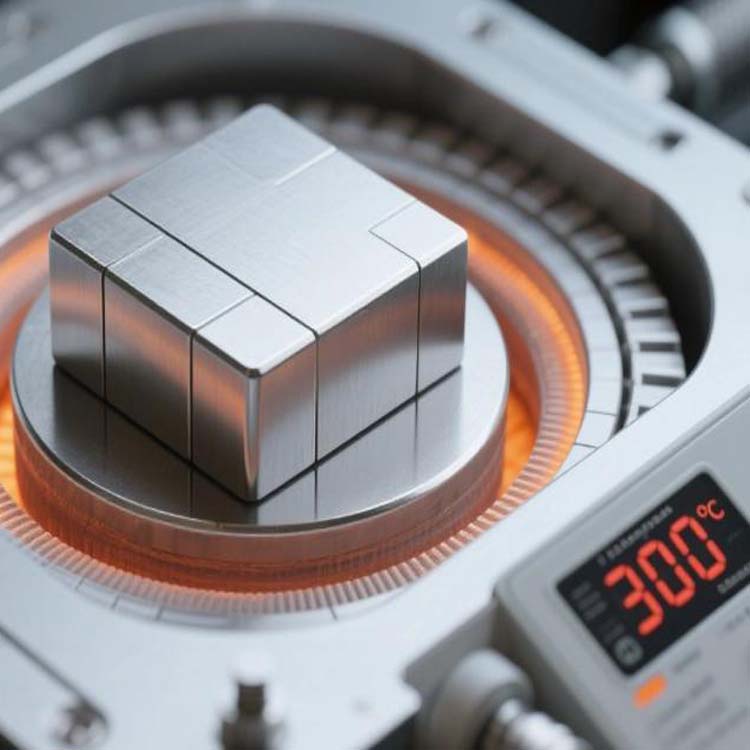
Note: The temperature resistance of each grade is based on testing a standard 10×10×10 mm cube.
The establishment of national standards provides a scientific basis for the production, application, quality control, and selection of NdFeB materials in various fields, promoting healthy development within the magnetic materials industry.
Dawa Magnetics has specialized in precision magnets for 33 years, with a profound understanding of the environmental applicability of various magnetic properties. Equipped with over 20 testing instruments, the company evaluates various characteristics of magnetic materials, helping customers quickly and accurately match material properties to achieve optimal magnetic performance and maximize product functionality.