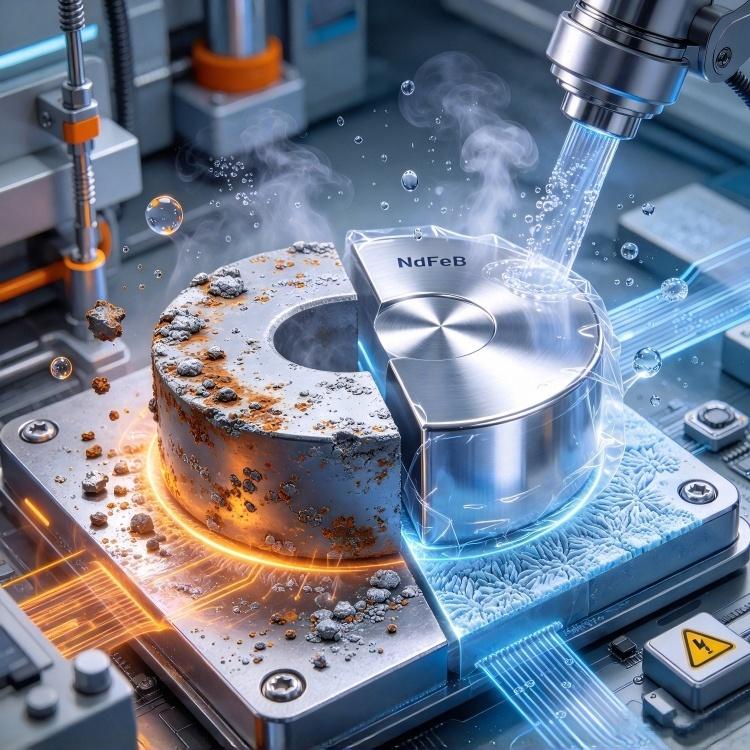
In industrial applications, magnet failure is rarely sudden. In most cases, engineers only notice it after system efficiency drops or equipment starts behaving inconsistently.
At DAWA, we often receive feedback from customers using neodymium magnets in motors, sensors, and automation systems. Interestingly, the issue is usually not “magnet quality failure”, but a combination of environment, design, and selection mismatch.A permanent neodymium magnet is stable by nature, but industrial systems are not. Heat, vibration, corrosion, and assembly conditions all influence long-term performance.Below, we summarize the most common failure causes based on real industrial cases.

Common Causes of Industrial Magnet Failure (Engineering View)
Instead of theory, here is how engineers usually categorize problems in real projects:
| Failure Factor | What Actually Happens | Root Cause in Practice | Severity |
|---|---|---|---|
| High Temperature | Magnet strength drops over time | Wrong grade selection or poor thermal design | High |
| Corrosion | Surface breaks down, performance declines | Coating damage or humid environment | Medium–High |
| Mechanical Stress | Chipping or cracking during operation | Poor mounting design or vibration | High |
| Magnetic Interference | Sensor/system instability | Improper layout or shielding | Medium |
| Material Mismatch | Insufficient or excessive magnetic force | Wrong grade of neodymium magnets | High |
From a supplier point of view, most failures come from the first two rows—temperature and selection mismatch.
1. Temperature is still the most underestimated problem
In real industrial systems, temperature is rarely constant. Motors heat up, cooling cycles vary, and long-term operation creates thermal stress. When engineers use a strong neodymium magnet without considering temperature grade, performance loss usually shows up after weeks or months—not immediately. We’ve seen many cases where magnets were selected only based on force requirement, while thermal behavior was ignored. This is where problems start. A permanent neodymium magnet will not fail instantly under heat, but it will gradually lose magnetic strength if exposed beyond its rated limit.
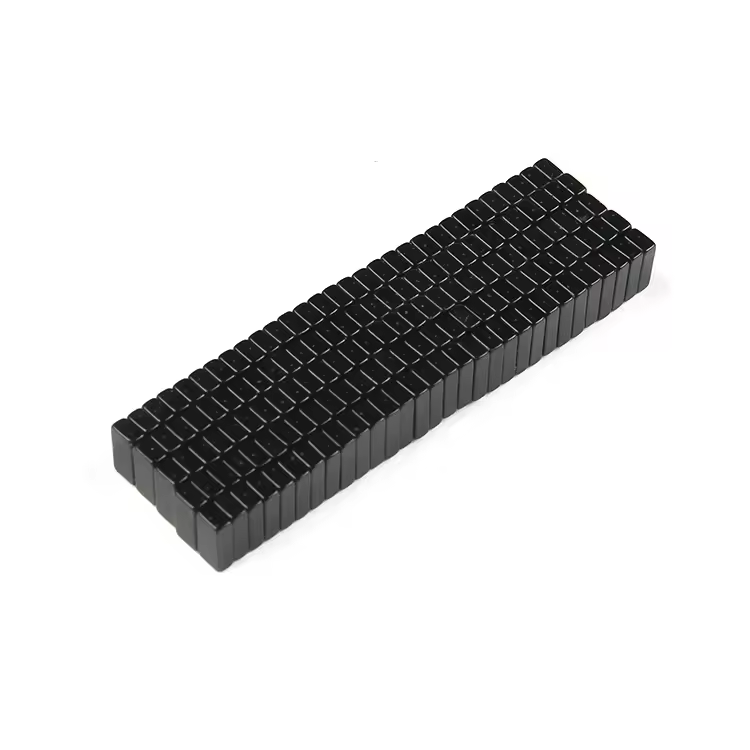
2. Coating damage looks small but creates long-term failure
Corrosion is often underestimated because it starts visually small.
| Coating Type | Typical Use Environment | Weak Point |
|---|---|---|
| Nickel (Ni-Cu-Ni) | General industrial use | Not ideal for strong chemicals |
| Zinc (Zn) | Cost-sensitive applications | Lower corrosion resistance |
| Epoxy | Outdoor / humid environments | Can wear under friction |
Once coating is damaged, oxidation begins slowly. In many field cases, the neodymium magnets still “look fine” at first, but magnetic efficiency gradually decreases. This is why coating selection should always match real operating conditions, not just cost.
3. Mechanical stress is often a design issue, not a material issue
One common misunderstanding is assuming a strong neodymium magnet is mechanically tough.
In reality, neodymium magnets are brittle materials. They perform well in compression but are weak under impact or misalignment stress.
In industrial equipment, vibration is constant. If mounting design is weak, even a high-grade magnet will chip or crack over time.
We usually tell customers:
The magnet rarely fails alone—it fails with the structure around it.
4. Magnetic interference is a system-level problem
This is something many engineers only discover during testing.
When multiple magnetic or electronic components are packed into a system, field overlap can happen. This affects sensor accuracy or motor stability. This is not a defect of neodymium magnets, but a layout design issue. A good neodymium magnet supplier usually supports customers during the design phase, not only after production.
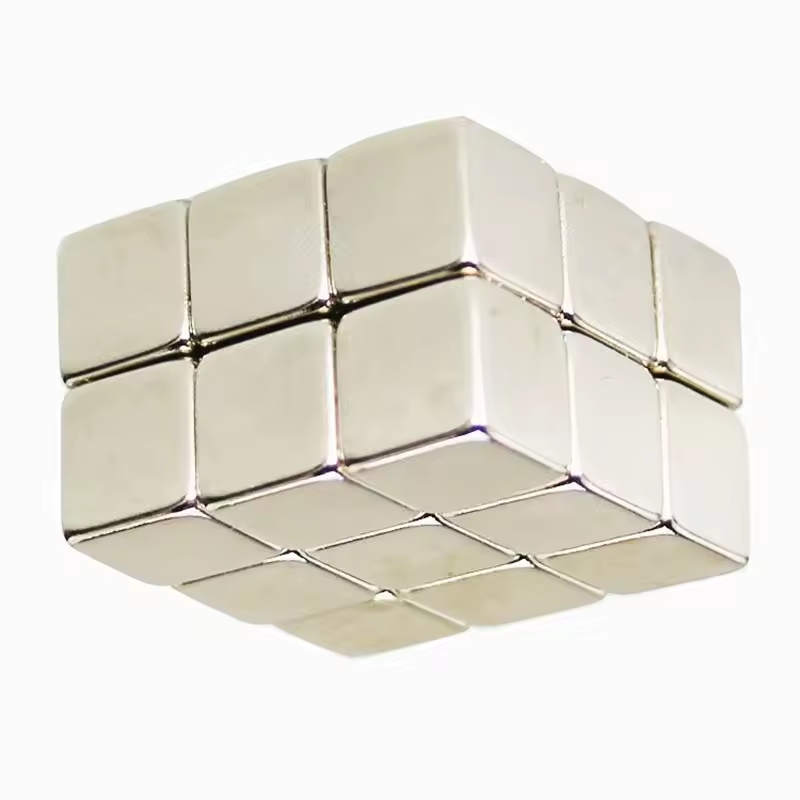
Field Experience Summary (DAWA View)
From real industrial cases, we can simplify failure causes like this:
| Real Situation | What Engineers Think | What Actually Happens |
|---|---|---|
| Magnet lost strength | Material failure | Temperature exceeded design limit |
| Sensor unstable | Magnet defect | Magnetic interference |
| Corrosion seen | Supplier issue | Coating mismatch with environment |
| Breakage occurred | Weak product | Mechanical stress from design |
This gap between “perception vs reality” is where most problems come from.
How to reduce industrial magnet failure in real systems
Based on our experience as a neodymium magnet supplier, three things matter most:
First, always match grade selection with real operating temperature—not theoretical specs.
Second, choose coating based on environment, not cost alone.
Third, treat magnet design as part of system engineering, not a standalone component.
A properly selected permanent neodymium magnet can operate reliably for years without degradation if these conditions are controlled early.