In most industrial projects, selecting neodymium magnets is rarely treated as a simple material choice. Engineers usually start from system requirements, then gradually narrow down specifications based on performance, environment, and reliability expectations. At DAWA, we often see that different applications require completely different evaluation priorities, even if they use similar neodymium magnets.
As a neodymium magnet supplier, DAWA works closely with OEM manufacturers and industrial designers, so we understand how these decisions are actually made in real production environments rather than on paper.
1. Magnetic strength is always the starting point, but not the final decision
Engineers usually begin by checking magnetic strength. This is where grades like N35 to N52 come into discussion. A strong neodymium magnet may look like the obvious choice at first, especially when space is limited or force requirements are high.
However, in real applications, higher strength does not automatically mean better performance. Once engineers move deeper into the design, they start considering stability, safety margin, and how the magnet behaves inside the full system rather than in isolation. In many cases, the final selection is a balance between force output and operational stability, not maximum strength alone.

2. Temperature conditions often change the entire selection
One point that engineers almost always revisit is temperature. A permanent neodymium magnet behaves differently under heat, and this is where many early design assumptions get adjusted.
In motors, automotive systems, or energy equipment, operating temperature is rarely constant. Because of this, engineers usually evaluate not only the nominal temperature rating, but also peak conditions and long-term thermal exposure. From our experience as a neodymium magnet supplier, temperature mismatch is one of the most common reasons for performance issues in the field.
3. Surface protection becomes important only after real-world testing
Coating is often underestimated at the beginning of a project. On drawings, it may look like a secondary detail, but in real industrial environments it becomes critical.
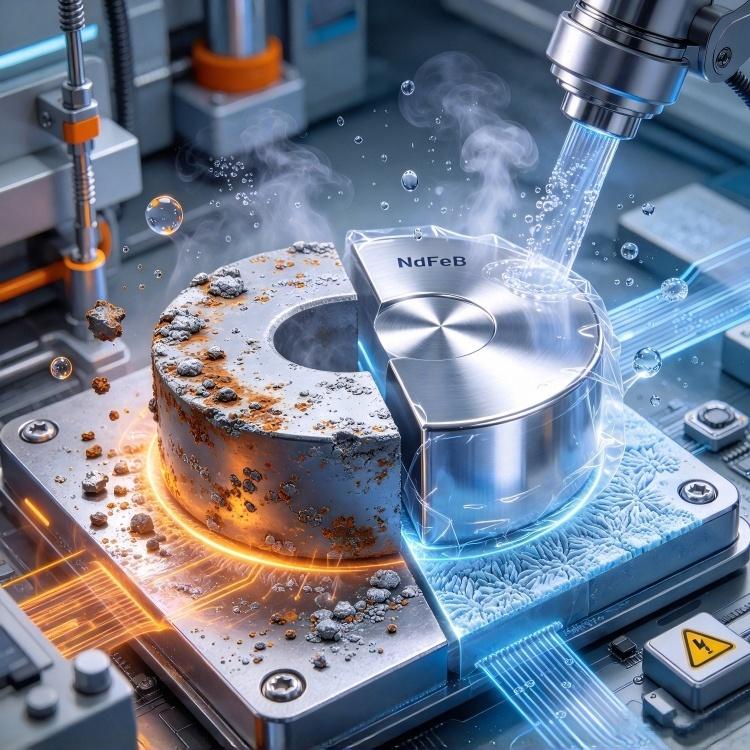
Most neodymium magnets will require nickel, zinc, or epoxy coatings depending on humidity, chemical exposure, or outdoor installation conditions. Engineers usually only realize the importance of coating after early prototypes are tested. At DAWA, we often adjust coating recommendations based on how the magnet will actually be used, not just standard specifications.
4. Mechanical fit is where theory meets production reality
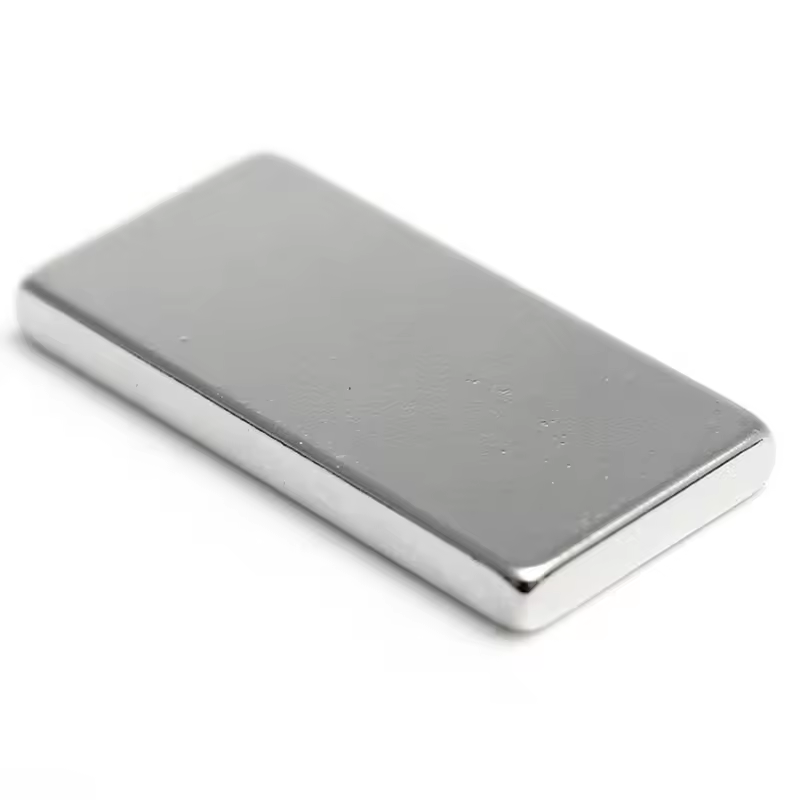
Even if a strong neodymium magnet meets all performance targets, it still needs to fit properly into the mechanical system. This is where shape, tolerance, and assembly method become important. Disc, block, ring, and custom shapes all behave differently once installed. Engineers usually evaluate whether the magnet can be assembled reliably at scale, not just whether it works in a single prototype. In mass production, small dimensional issues can turn into serious assembly problems.
5. Supplier stability matters more than most design teams expect
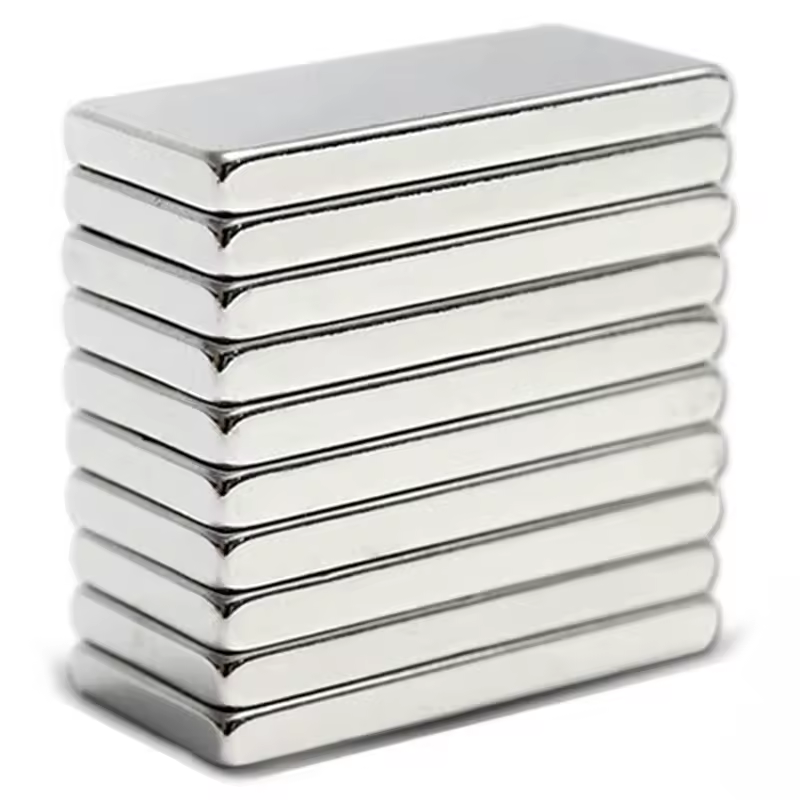
Another factor that engineers increasingly care about is supply stability. A neodymium magnet supplier is not just a material vendor but part of the production chain. Even small variations between batches can affect motor balance, sensor calibration, or system efficiency. That is why engineers often prefer suppliers who can guarantee consistent production over long periods. DAWA focuses heavily on batch consistency, because we understand that industrial customers care more about stability than short-term pricing.
6. Real applications always redefine the requirements
In practice, the application often reshapes the original design assumptions. For example, a magnet designed for a motor may later be used in a higher vibration environment, or a sensor may need better temperature resistance than initially expected. This is why engineers rarely finalize neodymium magnets selection in a single step. It is usually an iterative process between design, testing, and adjustment.
Final thoughts
Choosing neodymium magnets is less about picking a material and more about understanding how that material behaves inside a real industrial system. Strength, temperature, coating, mechanical design, and supply consistency all interact with each other. A permanent neodymium magnet that works well in one system may fail in another if these factors are not balanced correctly. As a neodymium magnet supplier, DAWA supports this process by helping industrial customers match specifications with real application conditions, not just catalog parameters.