High Temperature Neodymium Magnets for Electric Vehicles (EVs): Everything You Need to Know
Introduction:
The rapid growth of electric vehicles (EVs) has created increasing demand for high-performance permanent magnet materials. As EV manufacturers continue to pursue higher efficiency, longer driving ranges, and better motor performance, the requirements for magnetic materials used in drive motors are becoming more demanding.
Among various magnetic materials, high temperature neodymium magnets have become a critical component in EV motor systems due to their excellent magnetic strength, compact size, and reliable performance under challenging conditions.
Dawa provides customized high temperature NdFeB magnet solutions designed to support electric vehicle motors with stable magnetic performance, improved efficiency, and long-term reliability.

Why Do EV Motors Require High Temperature Magnets?
Electric vehicle motors often operate under high-speed rotation, heavy loads, and frequent acceleration conditions. During operation, heat generated by electromagnetic losses and mechanical stress can significantly increase the temperature inside the motor.
For conventional magnets, high temperatures may lead to:
- Reduced magnetic performance
- Lower motor efficiency
- Decreased output power
- Shortened service life
High temperature neodymium magnets are specially designed to maintain strong magnetic properties even under elevated temperatures.
By improving temperature stability, these magnets help EV motors achieve:
- More consistent power output
- Better energy efficiency
- Reliable operation under demanding driving conditions
Key Requirements for EV Motor Magnets
EV motors require magnets that can deliver stable performance throughout the vehicle’s lifetime.
Important performance factors include:
High Magnetic Energy Product
High magnetic energy density allows motors to generate stronger output while maintaining a compact design.
This helps EV manufacturers achieve:
- Higher motor efficiency
- Reduced motor size
- Improved vehicle performance
High Coercivity
High coercivity helps magnets resist demagnetization caused by heat and strong magnetic fields. This is especially important for EV motors operating under high loads and frequent temperature changes.
Corrosion Resistance
Because EV motors may experience moisture, temperature changes, and harsh environments, magnets require proper surface protection to improve durability.
Dimensional Consistency
Precision manufacturing ensures that magnets fit accurately into motor assemblies, improving motor balance and overall performance.

Producing reliable EV magnets requires advanced manufacturing technologies and strict quality control.
Sintered NdFeB Magnet Technology
Sintered neodymium magnets are widely used in EV motors because they provide excellent magnetic strength and energy density.
The manufacturing process includes:
- Raw material preparation
- Powder processing
- Pressing and sintering
- Heat treatment
- Precision machining
- Surface coating
Grain Boundary Diffusion (GBD) Technology
Grain boundary diffusion technology improves the coercivity of NdFeB magnets while reducing the need for large amounts of heavy rare earth elements.
This technology helps achieve:
- Better temperature resistance
- Improved magnetic stability
- More efficient use of rare earth resources
Automated Inspection and Quality Control
EV applications require high consistency. Advanced inspection systems help monitor:
- Magnetic performance
- Dimensional accuracy
- Surface quality
- Batch consistency
Reliable quality control ensures stable performance in large-scale EV production.
Common Questions About Neodymium Magnets
Why are neodymium magnets so brittle?
Neodymium magnets are sintered—made by pressing metal powder into shape and heating it. This process creates a very strong magnetic material but also makes it brittle, similar to ceramic. Dropping one or letting two snap together can cause chips or cracks. Handle them with care.
Can neodymium magnets lose their strength?
Yes, but slowly. The main causes of strength loss are:
-
Heat: Exceeding the magnet’s maximum operating temperature causes irreversible demagnetization.
-
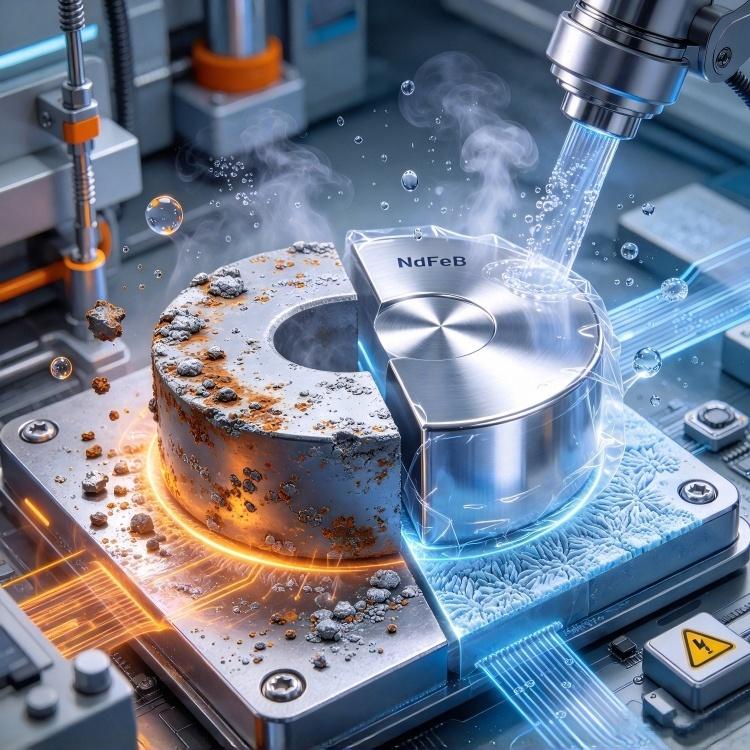
Corrosion: Without proper coating (nickel, epoxy, or gold plating), moisture can cause oxidation and flaking.
-
Physical damage: Cracks and chips disrupt the magnetic domains.
Are neodymium magnets dangerous?
Small neodymium magnets can be extremely dangerous if swallowed—especially multiple magnets, which can attract through intestinal walls. They can also interfere with pacemakers and other medical devices. Always keep them away from children and handle with care.
How can I tell if a magnet is neodymium?
Neodymium magnets are typically silver or gold-colored (due to nickel or gold plating), very strong for their size, and often heavier than they look. If a small magnet holds significantly more weight than a larger ceramic magnet, it’s almost certainly neodymium.
Challenges Facing EV Magnet Manufacturers
Although demand for high-performance magnets continues to grow, manufacturers also face several challenges.
Rare Earth Supply and Cost Pressure
Neodymium and other rare earth materials are important components of high-performance magnets. Changes in supply and market prices can affect manufacturing costs.
Reducing Heavy Rare Earth Dependence
Heavy rare earth elements improve temperature resistance but increase costs.
Therefore, manufacturers are developing technologies such as grain boundary diffusion to reduce heavy rare earth usage while maintaining performance.
Environmental and Supply Chain Requirements
The EV industry requires more sustainable production methods, including:
- Cleaner manufacturing processes
- Better resource utilization
- More stable global supply chains
Magnet manufacturers need to continuously improve technology to meet these changing demands.
FAQ
Why do electric vehicles use neodymium magnets?
Neodymium magnets provide high magnetic strength and excellent energy density, allowing EV motors to achieve high efficiency and compact designs.
Why are high temperature magnets important for EV motors?
EV motors generate significant heat during high-speed and high-load operation. High temperature magnets help maintain stable magnetic performance and prevent efficiency loss.
What is the difference between UH and EH grade magnets?
UH and EH grades are both high-temperature neodymium magnets. EH grade provides higher temperature resistance and is suitable for more demanding motor applications.
How do manufacturers improve NdFeB magnet temperature resistance?
Manufacturers improve temperature resistance through optimized material composition, grain boundary diffusion technology, and advanced manufacturing processes. High temperature neodymium magnets are essential materials for modern electric vehicle motors. Their ability to maintain strong magnetic performance under high-temperature conditions makes them a key factor in improving EV efficiency, reliability, and motor lifespan.
With advanced manufacturing technology and customized magnet solutions, Dawa supports the growing needs of electric vehicle manufacturers by providing reliable high temperature NdFeB magnets for demanding automotive applications. As the EV industry continues to evolve, high-performance permanent magnets will remain a crucial technology driving the future of electric mobility.
Dawa Jiahao, facilitate innovation and mass production