What Should You Check in a Magnet Supplier’s Quality Control Process?
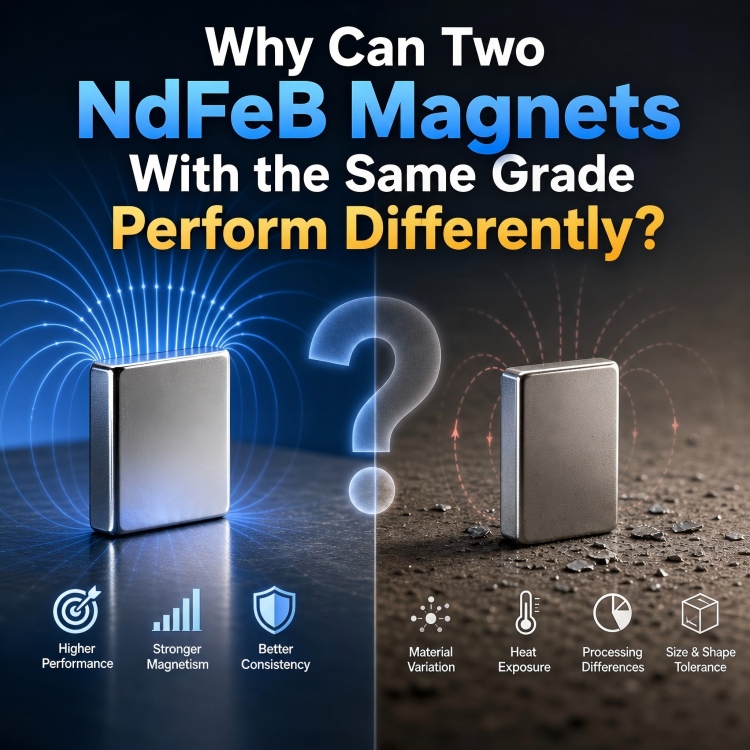
Choosing a magnet supplier is not simply a matter of comparing grades, prices, and delivery times. For OEMs and engineering teams, the more important question is whether the supplier can produce magnets that meet the same requirements consistently from one batch to the next.
This is especially important for NdFeB magnets, which are widely used in motors, sensors, speakers, magnetic couplings, robotics, and other precision applications. A small variation in magnetic properties, dimensions, or coating can affect the performance of the final product.
So, what should you actually check when evaluating a magnet supplier’s quality control process?
Quality problems can begin before the magnet enters production.
NdFeB magnets depend heavily on material composition. Variations in raw materials can influence magnetic properties, temperature resistance, and consistency. A reliable NdFeB magnet manufacturer should therefore have a clear process for inspecting and controlling incoming materials.
Ask how the supplier verifies raw materials and whether material batches can be traced through production.
This becomes particularly important for custom magnets. If a project has specific requirements for remanence, coercivity, or temperature performance, material control provides the foundation for meeting those requirements consistently.
The magnet grade alone is not enough.
For NdFeB magnets, key parameters may include Br (remanence), Hcj (intrinsic coercivity), and BHmax (maximum energy product). Depending on the application, other magnetic characteristics may also need to be checked.
A good quality system should define when these properties are tested, what equipment is used, and how the results are recorded.
For OEM buyers, it is also worth asking whether the supplier provides test data for production batches rather than relying only on initial samples.
A sample can meet the specification. The real test is whether mass production continues to do so.
Magnetic performance is only part of the job. The magnet also needs to fit the product correctly.
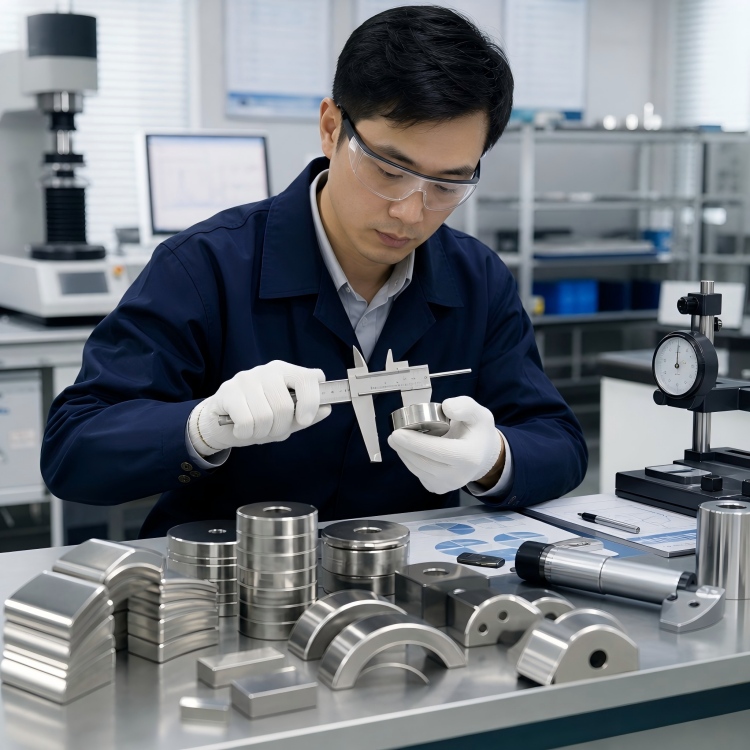
Length, width, thickness, diameter, flatness, and other dimensional requirements can become critical in compact assemblies. A small deviation may change an air gap or create problems during automated assembly.
When reviewing a magnet manufacturer, ask how dimensional tolerances are controlled during production and how finished parts are inspected.
For precision applications, the supplier should be able to work with clearly defined drawings and tolerances rather than treating dimensions as approximate values.
Magnetization is another quality-control point that can directly affect product performance.A magnet may have the correct material grade and dimensions but still fail to work properly if the magnetization direction is incorrect.
Depending on the application, the requirement may be axial, diametric, radial, or a customized magnetic pattern.
The supplier should have a defined magnetization process and a way to verify the finished magnetic orientation. This is particularly important for motors, encoders, sensors, and magnetic assemblies where field direction is part of the design.
Sintered NdFeB is susceptible to corrosion, so surface protection is often necessary.
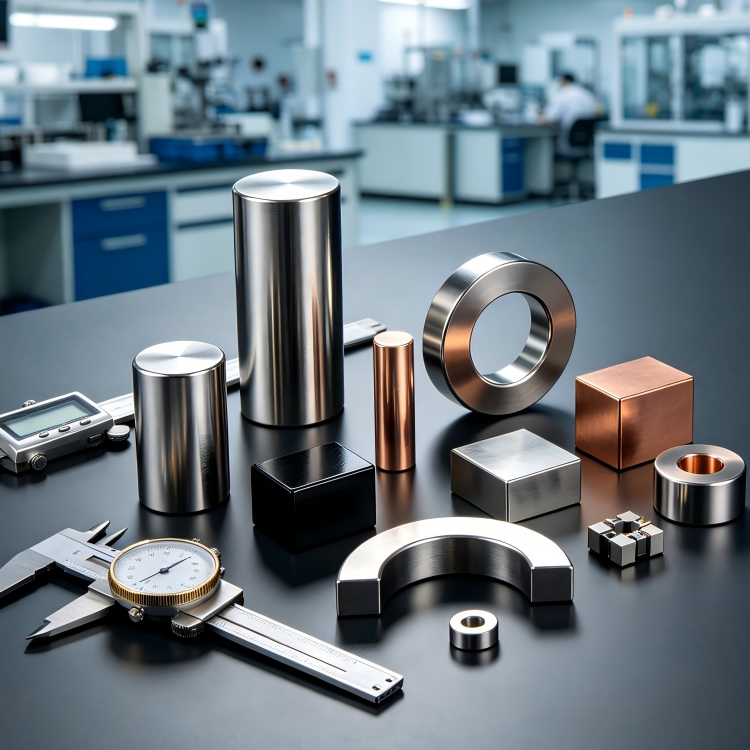
Common coatings include Ni-Cu-Ni and epoxy, but the right choice depends on the operating environment. Humidity, temperature, chemicals, salt exposure, and mechanical requirements can all influence the selection.
A NdFeB magnet supplier should have controls for coating thickness, surface appearance, adhesion, and corrosion resistance where required.
This is one area where buyers should look beyond appearance. A visually clean coating does not automatically prove that the magnet will remain protected throughout its intended service life.
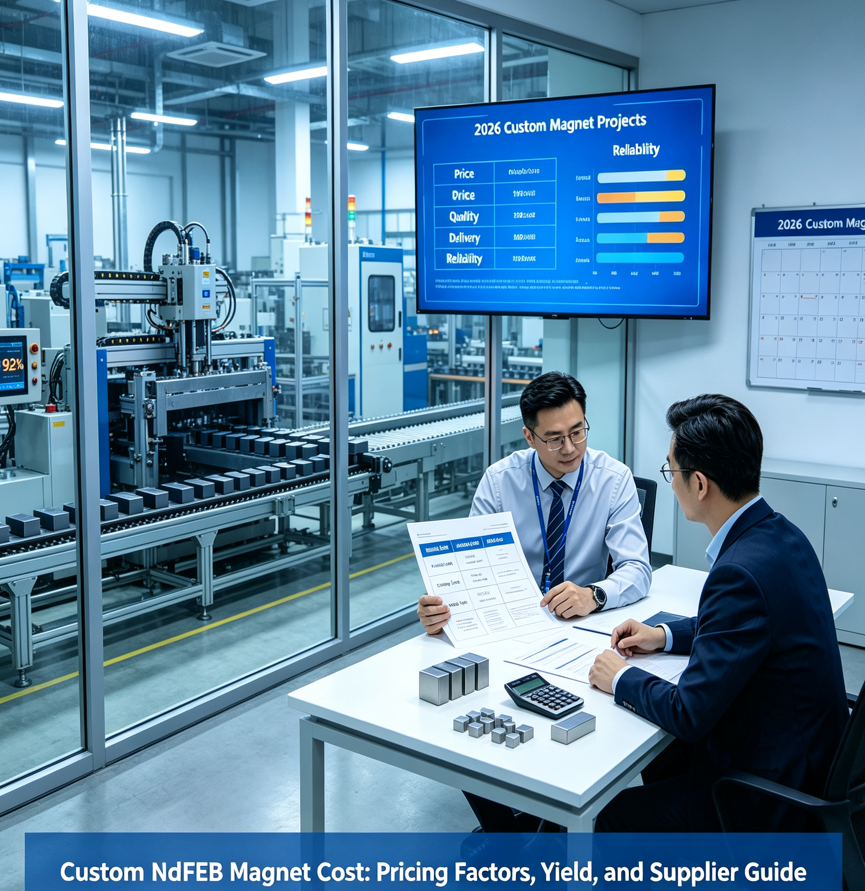
A magnet supplier should not be evaluated only by its quoted price or advertised magnetic grade.
For OEM and industrial applications, quality control, consistency, traceability, dimensional accuracy, magnetic performance, and coating reliability all contribute to the value of the final product.
The right supplier is one that can translate your technical requirements into a controlled manufacturing process and maintain those requirements throughout mass production.
For businesses sourcing custom NdFeB magnets, taking time to understand a manufacturer’s quality system before placing an order can reduce production risks later. With its manufacturing and inspection capabilities, DAWA supports customers who need permanent magnets produced to defined engineering and quality requirements.
Dawa Jiahao, facilitate innovation and mass production