Why Do Some Products Need Magnetic Assemblies Instead of Individual Magnets?
A magnet may provide the attraction force a product needs, but that does not always mean it can be installed directly into the final design. In many industrial and commercial products, magnets need to fit specific dimensions, connect with other components, remain securely positioned, or work within a particular mechanical structure. A standalone magnet may not meet all these requirements.
This is where magnetic assemblies become useful. By combining magnets with metal housings, brackets, plastic parts, or other supporting components, manufacturers can create a more complete solution for a specific application. Rather than treating the magnet as an isolated part, a magnetic assembly considers how it will be installed and used in the finished product.
For product designers, engineers, and purchasing teams, understanding this difference can help determine when a custom magnetic assembly is more practical than an individual magnet.
1. Individual Magnets Do Not Always Fit the Product Structure
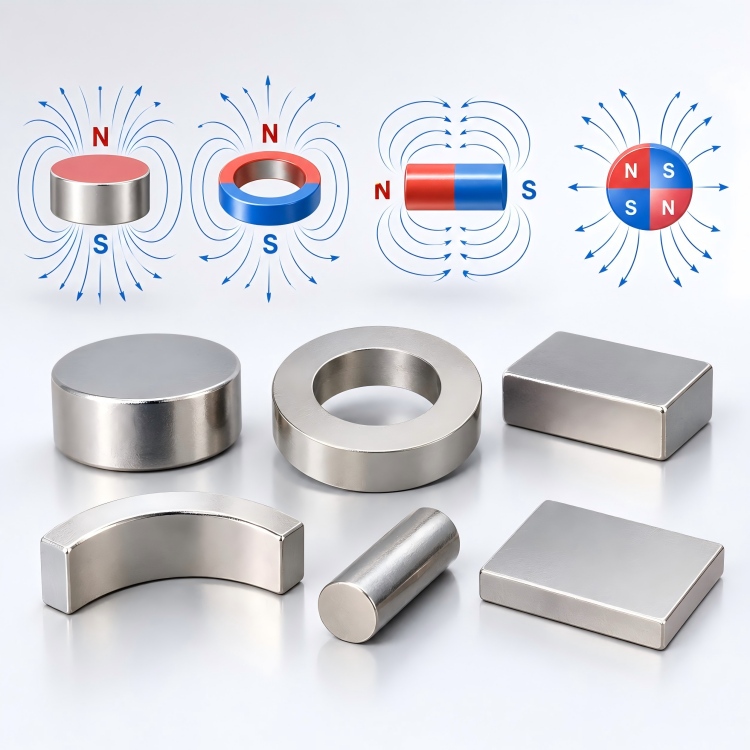
Individual magnets are available in different shapes, sizes, and materials, including neodymium, ferrite, and other magnetic materials. They are suitable for many applications where a simple magnetic attraction or holding function is required.
However, the final product may have additional structural requirements. A small magnet might need to be fixed inside a plastic housing, attached to a metal bracket, or positioned within a narrow mechanical space. Simply placing a magnet into the product may not provide sufficient support or the correct installation method.
A magnetic assembly addresses these requirements by integrating the magnet with other components. The surrounding structure can provide mounting points, positioning features, or physical protection, depending on the design.
For manufacturers developing products with specific assembly requirements, this integrated approach can make the component easier to incorporate into the overall design.
One important reason to use a magnetic assembly is the ability to combine a magnet with a specially designed metal structure.
In certain magnetic assemblies, steel plates, housings, or other ferromagnetic components are used to guide the magnetic flux or concentrate it toward a working surface. This can improve the useful holding force in a particular direction and make the assembly more suitable for its intended application.
For example, a magnetic holding component may use a metal housing to support the magnet and direct its magnetic field toward the contact surface. The final performance depends on several factors, including magnet grade, dimensions, air gap, metal material, and assembly geometry.
This is why magnetic assembly design should not focus on magnet strength alone. The interaction between the magnet and surrounding components also needs to be considered.
Installation is another important difference between individual magnets and integrated magnetic components.
A standalone magnet may require additional adhesive, a mounting bracket, or a separate retaining structure. These extra steps can increase assembly time and introduce more variables into production.
A custom magnetic assembly can incorporate mounting holes, threaded features, metal supports, or molded plastic structures to match the installation requirements of the final product. Instead of designing separate fixing parts around a standard magnet, product developers can specify an integrated component that fits the intended installation method.
This is particularly useful in products manufactured in large quantities, where consistent positioning and repeatable assembly procedures matter.
For OEM and ODM projects, discussing the installation structure early in the design stage can help avoid unnecessary modifications later.
4. Different Applications Require Different Magnetic Assembly Designs
There is no single magnetic assembly structure that works for every product. The required configuration depends on the function, installation environment, available space, and expected mechanical loads.
In electronic products, compact magnetic assemblies may be used for positioning, closure, or component retention. Their dimensions and magnetic characteristics need to fit the internal product structure.
In industrial equipment, magnetic assemblies may serve as holding or locating components. Metal brackets and protective housings can help integrate the magnet into the equipment structure.
For consumer products, magnetic components may be designed into covers, closures, detachable parts, or other mechanisms where controlled magnetic attraction is required.
These examples illustrate why custom magnetic assemblies are often developed around the end-use application rather than selected solely from a standard magnet catalog.
5. Material Selection and Manufacturing Accuracy Affect Assembly Quality
A magnetic assembly contains more than one component, so its overall quality depends on both material selection and manufacturing accuracy.
The magnet material should be selected according to the required magnetic strength, operating temperature, corrosion environment, and available installation space. Neodymium magnets, for example, provide high magnetic energy in a relatively compact size, while ferrite magnets may be suitable for applications with different cost and environmental requirements.
The non-magnetic components also matter. Metal parts need appropriate dimensions and surface quality, while plastic housings must match the required shape and assembly conditions. If the parts do not fit correctly, the finished assembly may have positioning issues or inconsistent performance.
For this reason, custom magnetic assembly manufacturing may involve several processes, including magnet production, metal stamping, precision machining, plastic injection molding, and component assembly. The exact process combination depends on the product design.
6. What Should Buyers Consider When Ordering Custom Magnetic Assemblies?
Before selecting a magnetic assembly manufacturer, buyers should clearly define how the component will be used. Providing only a magnet size or a target holding force may not be enough to establish the correct design.
Several details are worth confirming:
- Application requirements: Explain whether the assembly is used for holding, positioning, closing, or another function.
- Magnet specifications: Identify the required material, dimensions, magnetic grade, and magnetization direction where known.
- Structural design: Provide drawings or samples showing the required metal housing, bracket, plastic parts, or mounting features.
- Operating conditions: Consider temperature, moisture, corrosion exposure, and mechanical stress.
- Production requirements: Confirm dimensional tolerances, assembly consistency, inspection requirements, and expected order quantities.
Sharing this information during the initial development stage allows the manufacturer to evaluate the complete component rather than focusing on the magnet alone.
Individual magnets remain a practical option when a product only requires a basic magnetic function and the installation structure is already available. However, when a design involves specific mounting requirements, controlled magnetic performance, physical protection, or integration with other materials, a magnetic assembly may provide a more suitable solution.
For companies developing customized magnetic components, the decision should be based on the complete product structure and its operating requirements.
DAWA provides magnetic assembly solutions for different product and industrial applications, with manufacturing capabilities that include magnetic components and supporting metal and plastic parts. By considering magnet selection, structural design, and manufacturing requirements together, DAWA helps customers develop magnetic assemblies that are better aligned with their product designs and production needs.
Dawa Jiahao, facilitate innovation and mass production