How Can Custom Magnetic Components Reduce Assembly Complexity in Consumer Products?
A consumer product may look simple on the outside, but putting it together can involve more parts and work than expected. A small electronic device, for example, may need screws to secure its cover, clips to hold internal parts in place, and separate brackets to keep everything aligned. Each part serves a purpose, but together they can make assembly slower and more complicated.
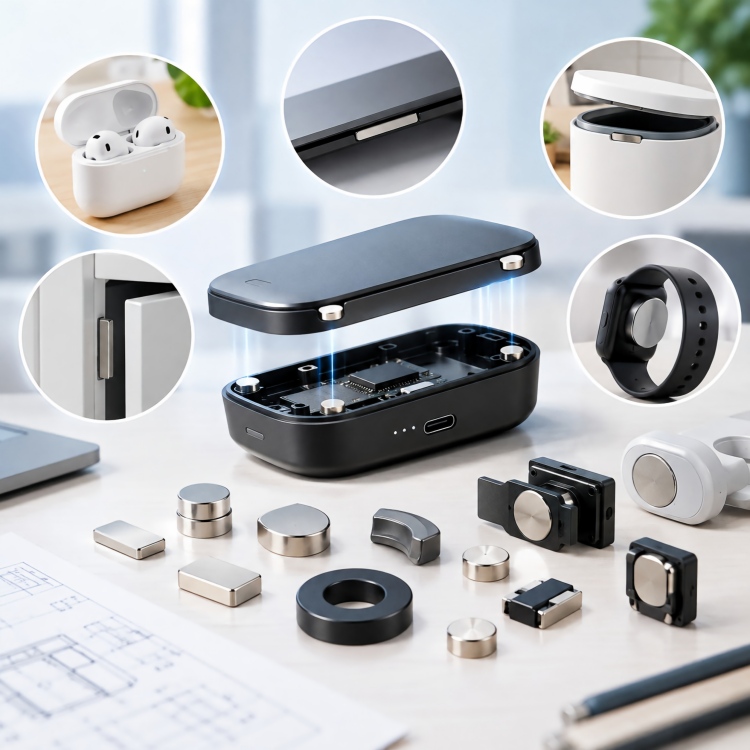
This is where custom magnetic components can make a difference. When magnets are designed around the product rather than added as an afterthought, they can simplify connections, reduce the need for separate hardware, and make certain assembly steps easier to manage.
For manufacturers developing consumer electronics, household appliances, and everyday accessories, the real question is not whether magnets can replace every fastener. It is where a magnetic design can make the product easier to build without compromising its performance.
Fewer Parts, Fewer Assembly Steps
Every additional component brings its own handling and installation requirements. Workers must position it correctly, secure it, and check that it performs as expected. In high-volume production, these small tasks add up. Take a removable cover on a consumer electronic device. A conventional design might use several screws to keep the cover in place. Depending on the application, a magnetic closure could provide the required retention without the same fastening procedure.
The benefit goes beyond removing screws. Fewer loose parts can simplify inventory management, reduce handling during assembly, and leave less room for installation errors. Of course, magnets are not suitable for every connection. Components exposed to heavy loads or safety-critical forces may still need mechanical fasteners. The important step is to identify where magnetic retention can meet the product’s actual requirements.
Better Alignment During Assembly
Getting two components into the correct position can be surprisingly time-consuming, especially when the parts are small or the available installation space is limited.
Custom magnetic components can help guide parts toward their intended position. In a detachable accessory, for example, a carefully arranged magnetic system can help the two sides connect more naturally. This can make installation easier for both assembly workers and end users.
However, magnetic attraction alone does not guarantee accurate alignment. The magnet’s position, pole orientation, surrounding materials, and distance between mating parts all affect the result. Mechanical guides may still be necessary when the design requires precise positioning.
That is why custom magnetic assemblies should be developed with the complete product structure in mind. Selecting a magnet based only on its advertised holding force may overlook the details that determine whether it works well in the finished product.
Which Tests Should Be Conducted After Final Assembly?
The appropriate inspection method depends on the product’s function and acceptance criteria. Not every magnetic component requires the same testing procedure.
Magnetic Field and Flux Density Measurement
A gaussmeter or an appropriate magnetic field measurement system can help verify field strength at specified locations. Engineers may use these measurements to confirm that the assembled component produces the required magnetic field within the intended operating area.
Measurement positions and distances should remain consistent so that results can be compared reliably.
Magnetic Holding Force Testing
For magnetic fixtures, closures, and holding systems, pull-force testing can evaluate whether the assembled product provides sufficient retention force.
The test should reproduce the relevant contact conditions, including the target material, surface condition, and working gap. Otherwise, the measured force may not reflect real-world performance.
Magnetization Direction Verification
Checking pole orientation after assembly is particularly important when components contain multiple magnets or require a specific magnetic arrangement.
Incorrect orientation can affect attraction, repulsion, coupling, or sensing behavior. Verification helps ensure that the magnetic configuration matches the engineering drawing and assembly requirements.
Functional Testing Under Operating Conditions
Some applications require more than a static magnetic measurement. Motors, sensors, and automated mechanisms may need functional tests that evaluate their response during movement, rotation, or normal operation.
These tests connect magnetic measurements with the actual purpose of the component, providing a more meaningful assessment of product performance.
Standard magnets are a practical choice when their size, shape, and magnetic performance match the application. Problems arise when the product has limited installation space or requires a specific connection that an off-the-shelf magnet cannot provide.
A magnet that is too thick may force changes to the housing. One with unsuitable magnetic force may make a cover difficult to remove or fail to hold it securely. In other cases, the magnet may need a separate bracket or holder, adding back some of the complexity the design was meant to remove.
A custom magnet manufacturer can help address these issues by considering the magnet’s dimensions, material, magnetization direction, coating, and installation method together.
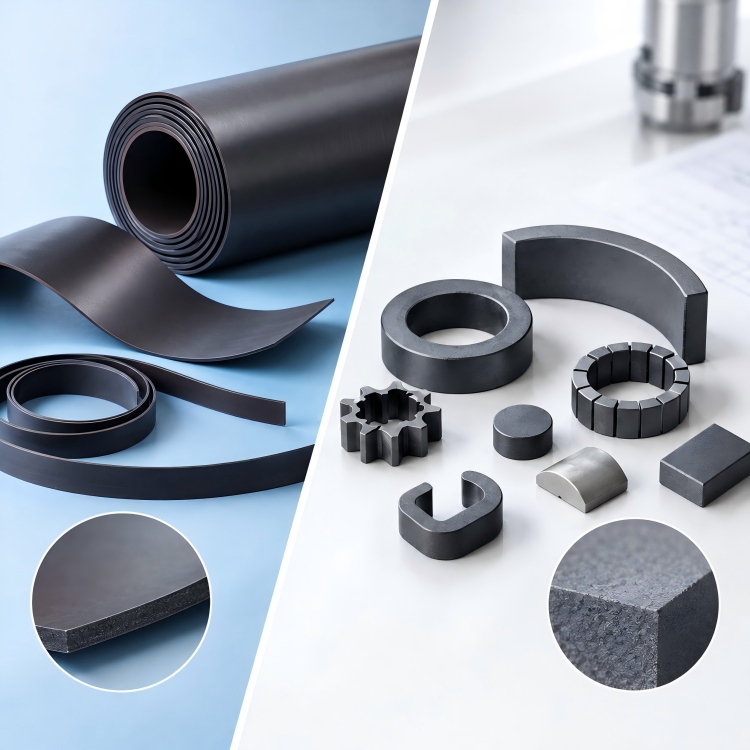
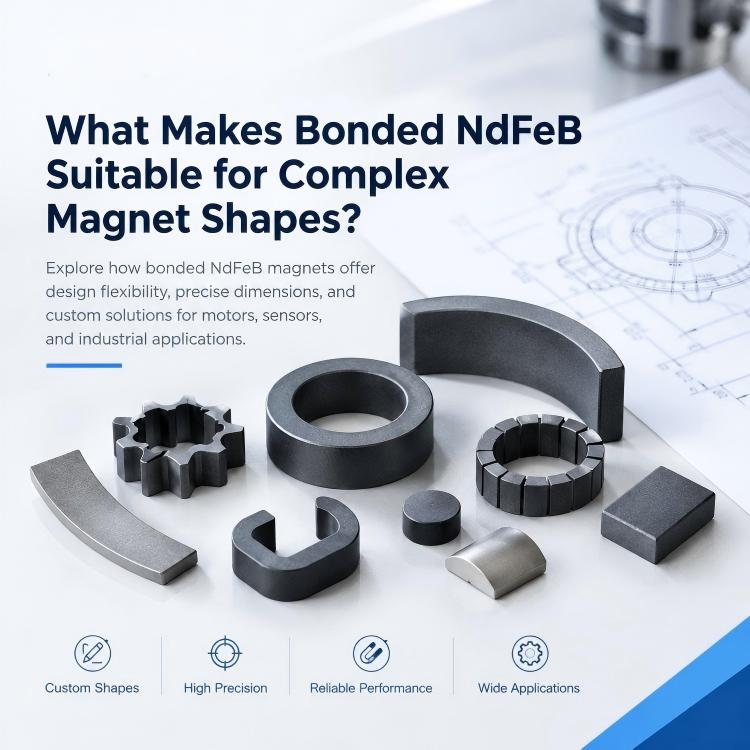
DAWA offers different magnet types, including sintered NdFeB, ferrite, SmCo, AlNiCo, rubber magnets, and bonded NdFeB. Each material has its own characteristics, so the right choice depends on the product’s space limitations, magnetic requirements, operating temperature, environment, and budget. The goal is not to customize every magnet. It is to develop a solution when a standard component creates unnecessary design or assembly compromises.
A magnetic solution may perform well in a prototype but behave differently once it enters regular production. Small variations in component dimensions, mounting positions, or the gap between magnets can affect the finished assembly.
Manufacturers should therefore test magnetic components in conditions that reflect the actual product. For a magnetic cover, this means checking whether it stays securely attached, opens with reasonable effort, and returns to the correct position after repeated use.
The mounting method also deserves attention. A magnet installed inside a plastic housing may need a different design from one attached to a metal part. Adhesives, mechanical holders, and integrated magnetic assemblies each bring different installation requirements.
Clear specifications can help prevent problems later. Product teams should share drawings or samples, available installation space, required holding performance, surrounding materials, and expected operating conditions with their magnetic component supplier. This information helps the supplier understand how the component will be used, rather than simply manufacturing a magnet to a size on a drawing.
The most useful starting point for a custom magnetic project is a clear description of the problem. Does the current design require too many fasteners? Is a removable part difficult to position? Does the existing magnet take up too much space or require an awkward mounting structure?
DAWA supports different permanent magnet materials and magnetic assembly applications. Sharing product drawings, samples, installation requirements, and target performance can help establish whether a custom solution is appropriate.
For consumer product manufacturers, good magnetic design is about more than producing attraction between two parts. It is about making the complete product easier to assemble, reliable in everyday use, and practical to manufacture at scale.
If your current product design involves unnecessary fastening steps or difficult component positioning, contact DAWA to discuss custom magnetic components for your application.
Dawa Jiahao, facilitate innovation and mass production