Why Is Magnetic Flux Consistency Important in Motor Magnet Manufacturing?
In electric motor manufacturing, small variations in magnetic performance can have a noticeable effect on the finished product. A motor may use magnets with the same material grade and nominal dimensions, yet differences in magnetic flux can influence how consistently it operates. This is particularly important in applications where stable torque, smooth rotation, and predictable performance are required.
For motor manufacturers, magnetic flux consistency is therefore more than a material specification. It is an important consideration throughout magnet selection, production, magnetization, and quality inspection. When sourcing motor magnets, buyers should look beyond magnetic strength alone. Understanding how magnetic flux consistency affects motor performance can help manufacturers make better decisions about magnet specifications and production quality.
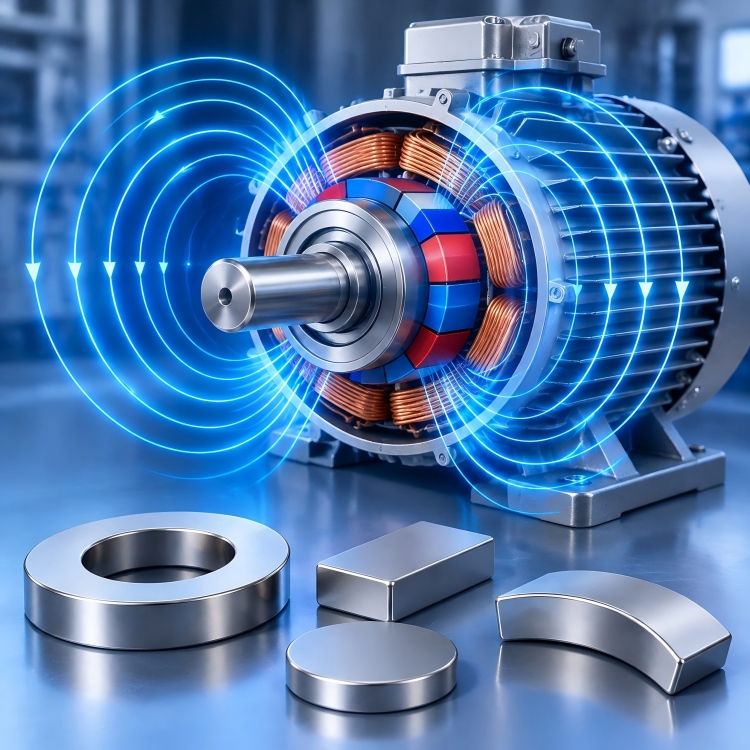
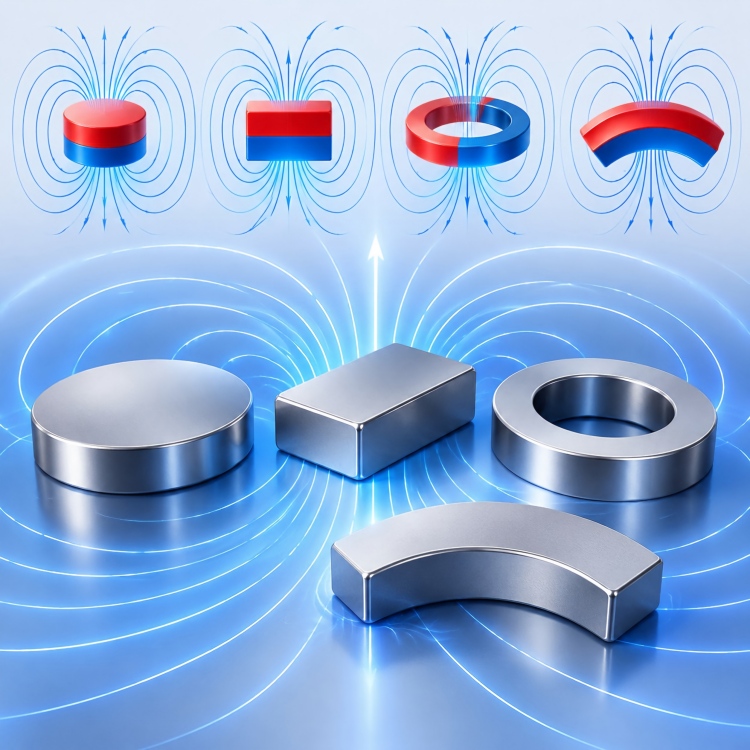
Magnetic flux describes the total magnetic field passing through a given surface. In permanent magnet motors, the magnets generate the magnetic field required for interaction with the motor’s other magnetic components.
Magnetic flux consistency refers to how closely the magnetic performance of individual magnets matches the required specifications. This can involve variations between magnets, differences among magnetic poles, and deviations from one production batch to another.
For example, if magnets installed around a rotor have noticeably different magnetic properties, the resulting air-gap magnetic field may become less uniform than intended. The effect depends on the motor structure, magnet arrangement, operating conditions, and control system.
It is also important to distinguish magnetic flux from magnetic flux density. Flux density describes the magnetic flux per unit area and is commonly used when evaluating the field at a particular location. In motor applications, engineers often need to consider both the magnet’s intrinsic properties and the magnetic field produced within the assembled motor.
Rare earth elements are fundamental to conventional NdFeB magnets, but their cost and availability can create challenges for manufacturers and industrial buyers. Heavy rare earth elements, particularly dysprosium and terbium, are especially important in certain applications requiring high coercivity at elevated temperatures.
Reducing dependence on these elements without compromising essential magnetic properties has therefore become a major research and development objective.
Several technologies are contributing to this effort.
First, grain boundary diffusion can improve coercivity through more localized use of heavy rare earth elements. Second, improved microstructure control can help manufacturers achieve better magnetic performance with more efficient material utilization. Third, ongoing research into alloy design and alternative diffusion materials may create additional options for reducing heavy rare earth requirements.
However, reducing heavy rare earth consumption does not mean eliminating rare earth elements from NdFeB magnets. Neodymium remains central to their magnetic performance, and some demanding applications will continue to require carefully engineered compositions.
The most appropriate approach depends on the intended operating temperature, demagnetization risk, target magnetic properties, and production cost.
For industrial buyers, these developments are relevant not only to material pricing but also to supply-chain planning. Working with a supplier that understands the relationship between magnetic grade, operating conditions, and material selection can help avoid unnecessary specifications and improve purchasing efficiency.
A permanent magnet motor relies on a carefully designed magnetic circuit. When the magnetic properties of individual magnets vary beyond the acceptable range, the distribution of the air-gap magnetic field can change.
This may influence several aspects of motor operation.
Torque consistency: Variations in magnetic field strength can affect the electromagnetic torque produced by the motor. Depending on the design, uneven magnetic performance may contribute to torque variation or increased torque ripple.
Back electromotive force (Back EMF): The magnetic field generated by permanent magnets contributes to the motor’s back EMF. Differences in magnetic performance can affect the back-EMF waveform and make it more difficult to maintain consistent electrical characteristics across production units.
Noise and vibration: Uneven magnetic forces may contribute to electromagnetic excitation, which can interact with mechanical resonances and produce additional noise or vibration.
Operating efficiency: Magnetic performance influences the motor’s electromagnetic behavior. However, efficiency also depends on winding design, iron losses, mechanical losses, control strategy, and operating conditions. Consistent magnets help manufacturers maintain predictable design conditions, but they do not independently determine overall motor efficiency.
These factors become particularly relevant in precision motors, automotive components, industrial drives, and other applications where stable operation is an important design requirement.
Magnetic flux consistency cannot be achieved through final inspection alone. It begins with controlling the factors that influence the magnet’s properties during production.
For sintered NdFeB magnets, raw material composition, powder processing, pressing, sintering, heat treatment, and subsequent machining can all affect the final magnetic characteristics. Variations in manufacturing conditions may lead to differences in properties such as remanence, coercivity, and maximum energy product.
Magnet dimensions also matter. Even when two magnets have similar magnetic material properties, differences in thickness, surface flatness, or overall geometry can influence the magnetic field available in the final assembly.
For this reason, a reliable permanent magnet manufacturing process needs to consider both material performance and dimensional accuracy. The objective is not simply to produce magnets that meet a general material grade, but to maintain consistency against the specifications required by the motor design.
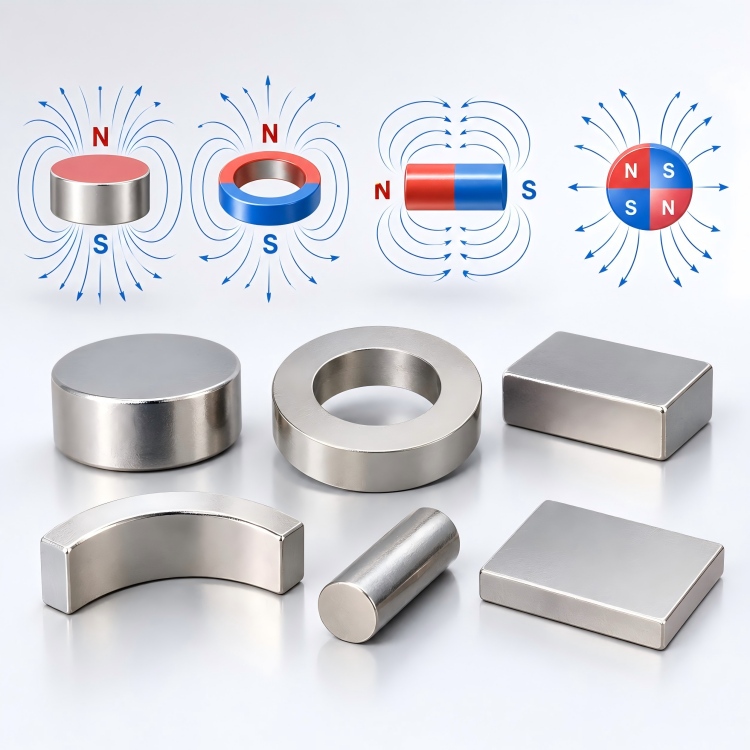
Magnetization is another important stage in motor magnet production. The magnetization direction and pole configuration must match the intended motor structure.
For example, a motor may require radially magnetized components, axially magnetized magnets, or a specific multi-pole arrangement. If the magnetization process is inconsistent, the resulting field distribution may differ from the design requirements even when the magnets have acceptable material properties.
In multi-pole motor applications, pole position and magnetic polarity are especially important. Incorrect pole orientation or variations in the magnetization pattern can affect assembly and motor operation.
Manufacturers should therefore establish suitable magnetization procedures and verify the magnetic characteristics of finished components. Depending on the product requirements, inspection may include pole identification, surface magnetic flux density measurements, and magnetic field distribution checks.
A structured inspection process helps identify variations before magnets are delivered for motor assembly.
Several quality checks can be useful:
- Material property testing: Evaluate relevant magnetic parameters, including remanence, coercivity, and maximum energy product, according to the specified grade.
- Dimensional inspection: Check critical dimensions, tolerances, and surface conditions that may affect installation and magnetic circuit geometry.
- Magnetic flux measurement: Measure magnetic flux or flux density using appropriate instruments and defined testing conditions.
- Magnetization verification: Confirm the required magnetic direction, polarity, and pole arrangement.
- Batch consistency checks: Compare inspection results across production batches to identify variations and maintain traceability.
Measurement conditions should also be standardized. Sensor position, distance from the magnet, temperature, orientation, and measurement equipment can all influence recorded results. Without consistent testing conditions, comparing magnetic data between batches may lead to misleading conclusions. For demanding motor applications, buyers should discuss acceptance criteria and inspection methods with their magnet supplier before mass production begins.
A clear technical specification makes it easier for a magnet manufacturer to understand the actual requirements of a motor project.
Instead of requesting magnets based only on material grade and size, buyers should provide relevant design information, including the intended motor application, magnet geometry, magnetization direction, required magnetic properties, dimensional tolerances, operating temperature, and expected production quantity.
Where necessary, engineers can also provide magnetic field requirements or reference test data. These details help the manufacturer determine appropriate production and inspection methods.
For custom NdFeB magnets, it is especially important to confirm whether the required magnetic performance can be maintained within the proposed geometry and manufacturing tolerances. This approach reduces uncertainty during sample approval and makes it easier to establish consistent specifications for subsequent bulk orders.
For motor manufacturers, choosing a suitable magnet supplier involves evaluating more than product availability. Material selection, dimensional control, magnetization requirements, and inspection procedures all contribute to the suitability of the finished component.
DAWA supplies permanent magnet products including sintered NdFeB, ferrite, SmCo, AlNiCo, rubber magnets, and bonded NdFeB. Its product range supports different industrial and electronic applications, including projects that require customized magnet geometries and magnetic assemblies.
For motor-related projects, buyers can discuss magnet material, dimensions, magnetization direction, magnetic performance requirements, and application conditions with DAWA. These specifications provide a basis for evaluating suitable manufacturing options and establishing inspection requirements.
By considering magnetic properties and production consistency together, manufacturers can make more informed decisions when developing motor magnets for specific applications.
Magnetic flux consistency is an important part of motor magnet manufacturing because it helps maintain predictable magnetic conditions throughout the motor assembly. Variations in magnet properties, dimensions, and magnetization can influence air-gap field distribution, torque behavior, and operating stability.
For buyers, the key is to establish clear magnetic and dimensional specifications before production begins, then verify that the manufacturing and inspection processes can maintain those requirements across batches.
A consistent motor magnet is not simply one that meets a nominal material grade. It is one whose magnetic characteristics, geometry, and magnetization meet the needs of the complete motor design.
Dawa Jiahao, facilitate innovation and mass production