High Temperature Neodymium Magnets: The Complete Guide for Engineers and Buyers
Introduction: Why High Temperature Neodymium Magnets Matter
With the rapid development of electric vehicles, industrial automation, renewable energy, aerospace systems, and high-performance motors, magnets are increasingly required to operate under extreme conditions. Traditional neodymium magnets provide excellent magnetic strength, but their performance can decrease when exposed to elevated temperatures for extended periods.
This is why high temperature neodymium magnets have become an essential solution for demanding industrial applications. These specialized NdFeB magnets are designed to maintain stable magnetic performance in high-temperature environments, providing reliable operation for motors, sensors, generators, and advanced mechanical systems.
For engineers and purchasing professionals, selecting the right heat resistant magnet is critical. Choosing an unsuitable grade may result in magnetic loss, reduced efficiency, or premature component failure.
As a professional magnet supplier, DAWA focuses on providing high-performance neodymium magnet solutions with customized options to meet different application requirements. This guide explains the characteristics, grades, manufacturing process, applications, and selection methods of high temperature NdFeB magnets to help engineers and buyers make better decisions.
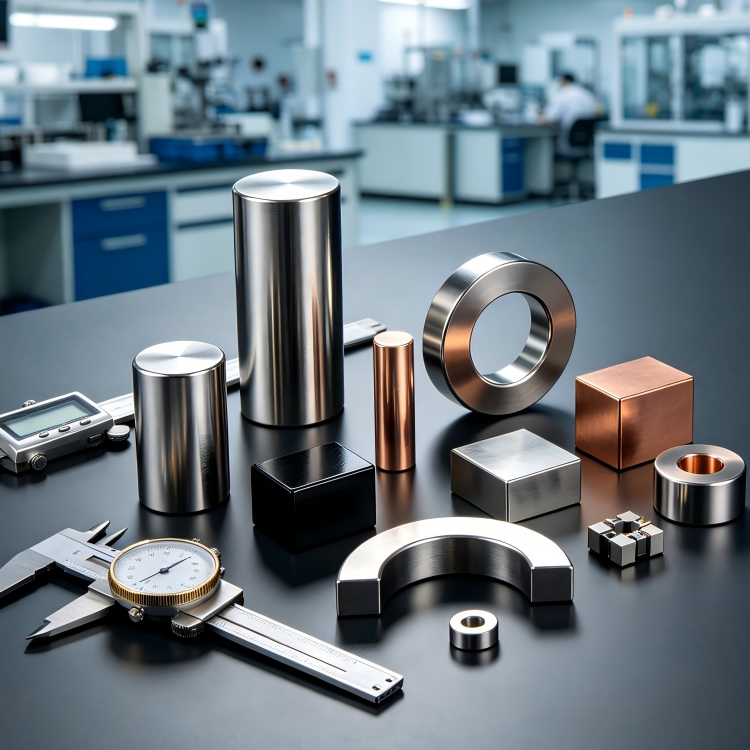
High temperature neodymium magnets are specially engineered NdFeB permanent magnets designed to maintain strong magnetic properties in environments with elevated temperatures.
Compared with standard neodymium magnets, high temperature grades achieve better thermal stability through optimized material composition and advanced manufacturing technologies. The main improvement comes from increasing the magnet’s coercivity, which helps resist demagnetization caused by heat.
During production, manufacturers may add heavy rare earth elements such as dysprosium (Dy) or terbium (Tb), apply grain boundary diffusion technology, and optimize the microstructure of the magnet. These improvements allow high temperature magnets to maintain reliable magnetic force even under harsh operating conditions.
Unlike ordinary NdFeB magnets that are commonly used in normal temperature applications, heat resistant neodymium magnets are designed for industries where performance stability is more important than simply achieving maximum magnetic strength.
Why Do Neodymium Magnets Lose Magnetism at High Temperatures?
Temperature is one of the most important factors affecting neodymium magnet performance. When exposed to excessive heat, the internal magnetic structure of NdFeB magnets can become unstable.
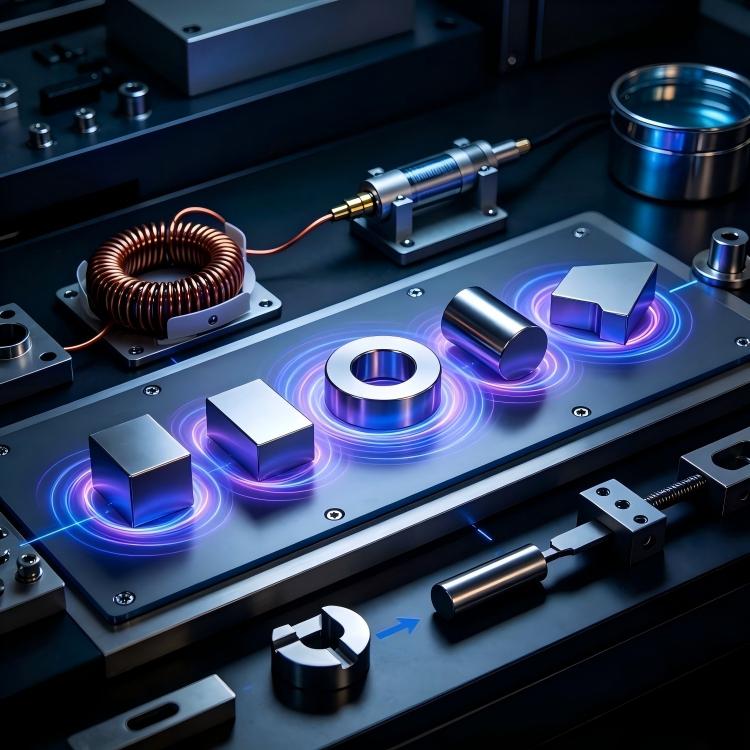
A neodymium magnet produces magnetic force because millions of microscopic magnetic domains are aligned in the same direction. When temperature increases, thermal energy causes these magnetic domains to vibrate more intensely, weakening their alignment.
High temperatures can lead to:
Magnetic Flux Density Reduction
As temperature rises, the magnetic flux density decreases. This means the magnet produces less magnetic force compared with its performance at room temperature.
Irreversible Demagnetization
If the temperature exceeds the magnet’s designed operating limit, the magnetic domains may permanently change their orientation. After cooling, the magnet cannot fully recover its original magnetic strength.
Reduced Motor Efficiency
In applications such as electric motors, reduced magnet performance can directly affect torque output, energy efficiency, and operating stability.
Therefore, understanding operating temperature requirements is essential when selecting high temperature NdFeB magnets.
Maximum Operating Temperature vs Curie Temperature
When choosing high temperature magnets, many buyers confuse maximum operating temperature with Curie temperature. These two concepts represent different performance limits.
Maximum Operating Temperature
The maximum operating temperature refers to the highest temperature at which a magnet can continuously work while maintaining acceptable magnetic performance.
For example, a SH-grade neodymium magnet may operate around 150°C, while UH-grade magnets can typically handle higher temperatures.
This parameter is more important for engineers because it reflects real working conditions.
Curie Temperature
The Curie temperature is the point where a magnet completely loses its ferromagnetic properties.
For NdFeB magnets, the Curie temperature is usually much higher than the recommended operating temperature. However, reaching this temperature means the magnet will no longer function as a permanent magnet.
In practical applications:
Maximum operating temperature = safe working range
Curie temperature = magnetic failure limit
Engineers should always select magnets based on actual operating temperatures rather than Curie temperature alone.
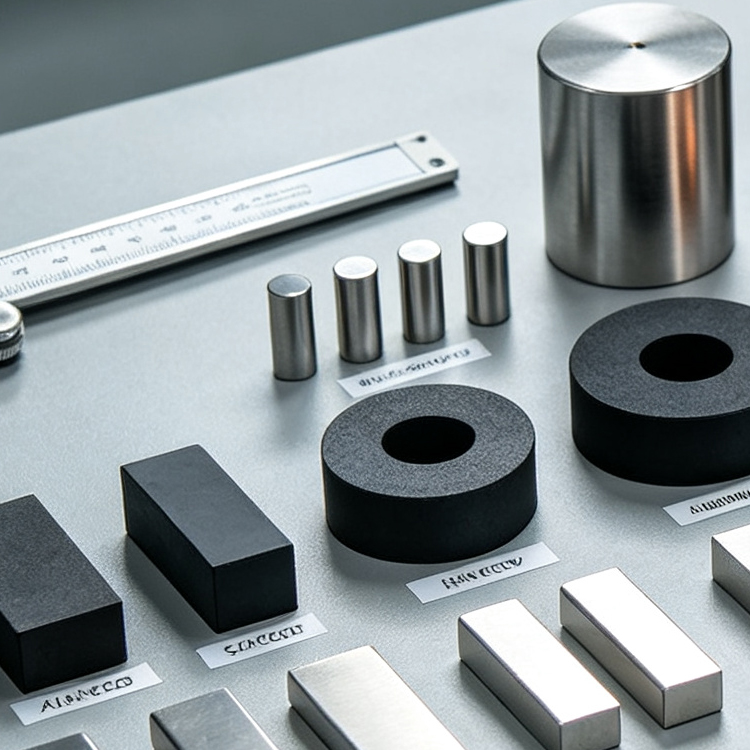
High Temperature Magnet Grades Explained (N, M, H, SH, UH, EH, AH)
Neodymium magnets are classified into different grades according to magnetic performance and temperature resistance. Higher grades generally provide better thermal stability but may involve higher material costs.
| Magnet Grade | Maximum Operating Temperature | Typical Applications |
|---|---|---|
| N Series | Around 80°C | General applications, consumer electronics |
| M Series | Around 100°C | Industrial equipment, sensors |
| H Series | Around 120°C | Motors, automation equipment |
| SH Series | Around 150°C | High-performance motors, EV applications |
| UH Series | Around 180°C | Industrial motors, aerospace equipment |
| EH Series | Around 200°C | Extreme temperature applications |
| AH Series | Above 200°C | Specialized high-temperature systems |
N Grade
Standard neodymium magnets with high magnetic strength but limited heat resistance. Suitable for normal temperature environments.
H Grade
Provides improved coercivity and better resistance to thermal demagnetization compared with standard grades.
SH Grade
One of the most widely used high temperature grades. It offers a balance between magnetic performance and heat resistance, making it suitable for electric motors and industrial applications.
UH and EH Grades
Designed for more demanding environments where temperatures can reach 180°C or higher. Commonly used in advanced motors, aerospace systems, and heavy industrial equipment.
AH Grade
The highest temperature-resistant NdFeB grade, developed for extreme operating conditions requiring maximum thermal stability.
DAWA provides customized high temperature magnet solutions based on customers’ temperature requirements, magnetic performance expectations, and application environments.
How High Temperature NdFeB Magnets Are Manufactured
The manufacturing process directly determines the temperature resistance and reliability of neodymium magnets.
Raw Material Selection
High-quality neodymium, iron, boron, and additional rare earth elements are carefully selected to achieve the required magnetic properties.
Powder Preparation and Sintering
The raw materials are melted, powdered, aligned in a magnetic field, pressed, and sintered at high temperatures to create dense permanent magnets.
Heavy Rare Earth Addition
Elements such as dysprosium and terbium improve coercivity and help magnets resist high-temperature demagnetization.
Grain Boundary Diffusion Technology (GBD)
GBD technology improves the magnetic structure near grain boundaries, increasing coercivity while reducing the need for large amounts of heavy rare earth materials.
Machining and Surface Treatment
After sintering, magnets are cut, polished, coated, and processed according to customer specifications.
Magnetization
The final step involves applying a strong magnetic field to align the magnetic domains and activate the magnet.
Through advanced manufacturing technologies, DAWA produces high temperature NdFeB magnets with stable performance and customized specifications.
FAQ
How high can high temperature neodymium magnets withstand?
Depending on the grade, high temperature NdFeB magnets can typically operate from 120°C to above 200°C.
What is the difference between SH and UH magnets?
SH magnets are generally rated around 150°C, while UH magnets provide higher temperature resistance, commonly around 180°C.
Can a demagnetized magnet recover after cooling?
If the magnet experiences irreversible demagnetization, its magnetic strength cannot fully recover.
Can NdFeB magnets work continuously at 180°C?
Yes, but only with suitable high-temperature grades such as UH or higher.
Can high temperature magnets be customized?
Yes. Manufacturers like DAWA can customize magnet size, shape, grade, coating, and magnetic performance.
Can suppliers provide RoHS and REACH certifications?
Professional magnet manufacturers can provide relevant compliance documents according to customer requirements.
Dawa Jiahao, facilitate innovation and mass production