High Temperature Neodymium Magnets for Electric Motors: Selection Guide for Maximum Performance
Introduction:
Electric motors are one of the largest application markets for high temperature neodymium magnets. With the development of high-power density motors, electric vehicle motors, and industrial automation equipment, magnets need to maintain stable magnetic performance under higher operating temperatures.
Choosing the right neodymium magnets for electric motors is essential to prevent demagnetization, improve motor efficiency, and extend service life. DAWA provides customized high-performance magnet solutions for various motor applications.
During operation, electric motors generate heat from several factors:
- Copper loss: Heat produced by current passing through motor windings.
- Iron loss: Energy loss caused by magnetic field changes in the core.
- Mechanical friction: Heat generated by rotating components.
- High-speed operation: Increased rotation speed creates additional thermal stress.
- Environmental temperature: External conditions also affect motor temperature.
Excessive heat can reduce the magnetic performance of neodymium magnets and cause permanent demagnetization. Therefore, selecting suitable high temperature neodymium magnets is critical for motor reliability.
Different motors require different temperature resistance levels:
BLDC Motors
BLDC motors commonly used in electric tools, drones, and automotive systems require magnets with good thermal stability and high magnetic strength.
Servo Motors
Servo motors need reliable magnetic performance to ensure precise control and stable torque output.
Industrial Drive Motors
Industrial motors often operate continuously under heavy loads, requiring durable high-temperature magnet materials.
Electric Vehicle Motors
EV drive motors face high temperature and high-speed conditions, usually requiring higher-grade neodymium magnets with excellent heat resistance.
Selecting the correct magnet grade depends on the maximum operating temperature and safety margin.
Common high-temperature grades include:
- SH Grade: Suitable for medium high-temperature applications.
- UH Grade: Designed for higher temperature motor environments.
- EH Grade: Used in demanding applications requiring excellent thermal stability.
- AH Grade: Provides extreme temperature resistance for special applications.
DAWA helps customers select the appropriate magnet grade based on motor design and working conditions.
Why are neodymium magnets so brittle?
Neodymium magnets are sintered—made by pressing metal powder into shape and heating it. This process creates a very strong magnetic material but also makes it brittle, similar to ceramic. Dropping one or letting two snap together can cause chips or cracks. Handle them with care.
Can neodymium magnets lose their strength?
Yes, but slowly. The main causes of strength loss are:
-
Heat: Exceeding the magnet’s maximum operating temperature causes irreversible demagnetization.
-
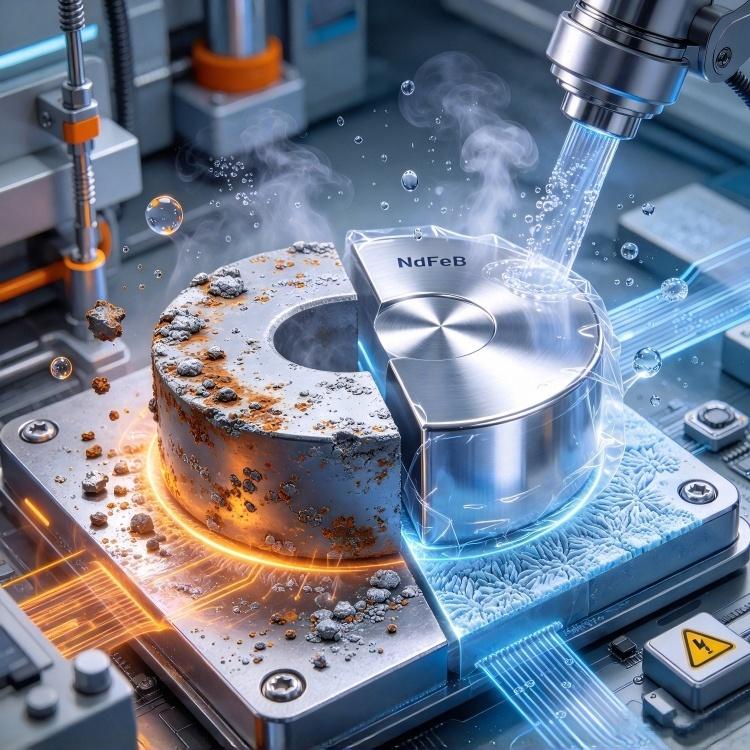
Corrosion: Without proper coating (nickel, epoxy, or gold plating), moisture can cause oxidation and flaking.
-
Physical damage: Cracks and chips disrupt the magnetic domains.
Are neodymium magnets dangerous?
Small neodymium magnets can be extremely dangerous if swallowed—especially multiple magnets, which can attract through intestinal walls. They can also interfere with pacemakers and other medical devices. Always keep them away from children and handle with care.
How can I tell if a magnet is neodymium?
Neodymium magnets are typically silver or gold-colored (due to nickel or gold plating), very strong for their size, and often heavier than they look. If a small magnet holds significantly more weight than a larger ceramic magnet, it’s almost certainly neodymium.
Besides magnet material, motor magnet design also affects performance.
Important factors include:
- Magnet dimensions and tolerances
- Magnetic circuit design
- Pole configuration
- Fixing methods
- Thermal expansion considerations
Proper design ensures magnets remain stable during long-term operation and high-speed rotation.
Conclusion:
Choosing the right high temperature neodymium magnets for electric motors requires considering operating temperature, magnet grade, design structure, and coating protection.
As an experienced high temperature magnet manufacturer, DAWA provides customized rare earth magnet solutions for BLDC motors, industrial motors, servo systems, and electric vehicle applications, helping customers achieve reliable and efficient motor performance.
What temperature resistance do motor magnets need?
The required temperature depends on motor type and operating conditions. High-performance motors may require SH, UH, EH, or AH grade magnets.
Is SH grade enough for electric motors?
For standard motor applications, SH grade may be sufficient. However, high-load or high-temperature motors may require UH or EH grades.
Do magnets affect motor efficiency?
Yes. Magnet strength directly affects motor torque, efficiency, and overall performance.
For more information, technical specifications, or to request samples, visit the DAWA Magnet website or contact our sales team directly.
Dawa Jiahao, facilitate innovation and mass production