A Practical Guide for Industrial Buyers
When selecting countersunk magnets for industrial applications, performance, durability, and installation compatibility all matter. Choosing the right product can directly affect assembly efficiency and long-term stability.
For engineering projects and manufacturing systems, a properly selected neodymium countersunk magnet ensures reliable fastening and reduces maintenance risks. As a professional neodymium countersunk magnet manufacturer, DAWA provides engineered magnetic solutions designed for industrial mounting and structural applications.
1. Application Requirements First
Before selecting a magnet, clearly define the usage scenario.
A countersunk rare earth magnet is designed with a tapered hole that allows screws to sit flush after installation.
It is commonly used in:
- Industrial fixtures
- Machine assembly systems
- Tool holding devices
- Furniture structure fixing
- Automation equipment
If your application requires repeated installation or high holding strength, a countersunk mounting magnet is more reliable than adhesive-based solutions.

2. Select the Right Magnetic Grade
Neodymium magnets are available in different grades such as N35 to N52.
Higher grades provide:
- Stronger magnetic force
- Better load stability
- More compact design options
Lower grades may be suitable for light-duty applications, while industrial use usually requires higher-grade neodymium materials.
3. Evaluate Holding Force Carefully
Holding force is a key factor in performance.
Consider:
- Object weight
- Steel thickness
- Vibration or movement conditions
- Safety margin requirements
A properly selected neodymium countersunk magnet ensures stable performance even in demanding environments.
4. Choose the Right Surface Coating
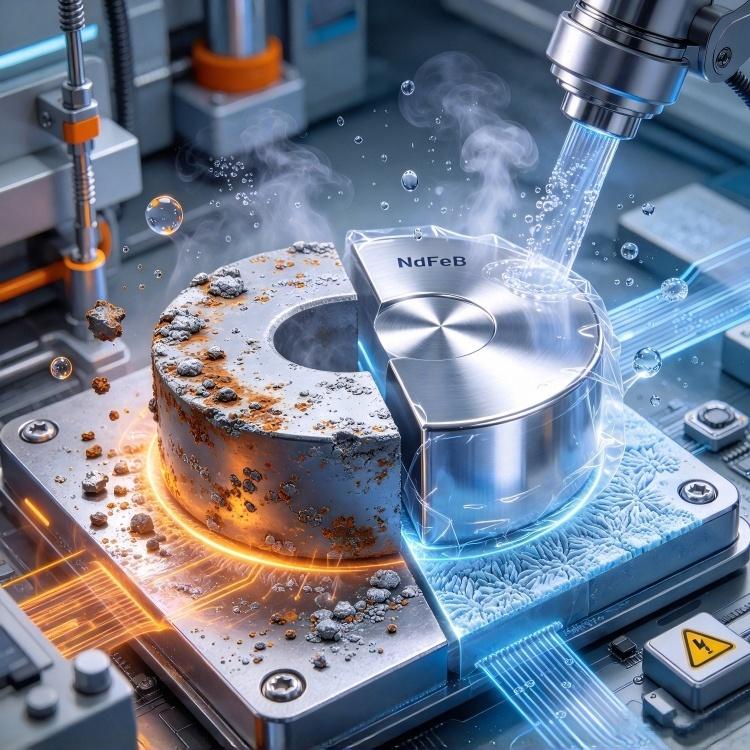
Neodymium material is sensitive to corrosion, so coating protection is essential.
Common options include:
- Ni-Cu-Ni (Nickel-Copper-Nickel): Standard industrial protection
- Epoxy coating: Suitable for humid or outdoor environments
- Zinc coating: Cost-effective for enclosed systems
Coating selection directly affects product lifespan.

5. Ensure Proper Size and Installation Match
Correct sizing is critical for safe installation.
Check:
- Countersunk angle (typically 90°)
- Screw compatibility (M3, M4, M5, etc.)
- Diameter and thickness
- Mounting surface alignment
Incorrect sizing can reduce holding performance or cause installation failure.

6. Work with a Reliable Manufacturer
Supplier capability determines product consistency.
A qualified neodymium countersunk magnet manufacturer should provide:
- Stable material quality control
- Precision machining capability
- Consistent pull force testing
- OEM/ODM customization
- Industrial inspection standards
DAWA delivers stable and high-performance magnetic solutions for global industrial customers.
✅ Conclusion
When buying countersunk magnets, focusing only on cost can lead to performance issues. Instead, consider material grade, holding force, coating, and supplier capability.
A high-quality neodymium countersunk magnet delivers strong, stable, and long-term performance in industrial environments. With advanced manufacturing capability, DAWA as a professional neodymium countersunk magnet manufacturer, provides reliable countersunk rare earth magnet solutions for industrial fastening and mounting applications.